

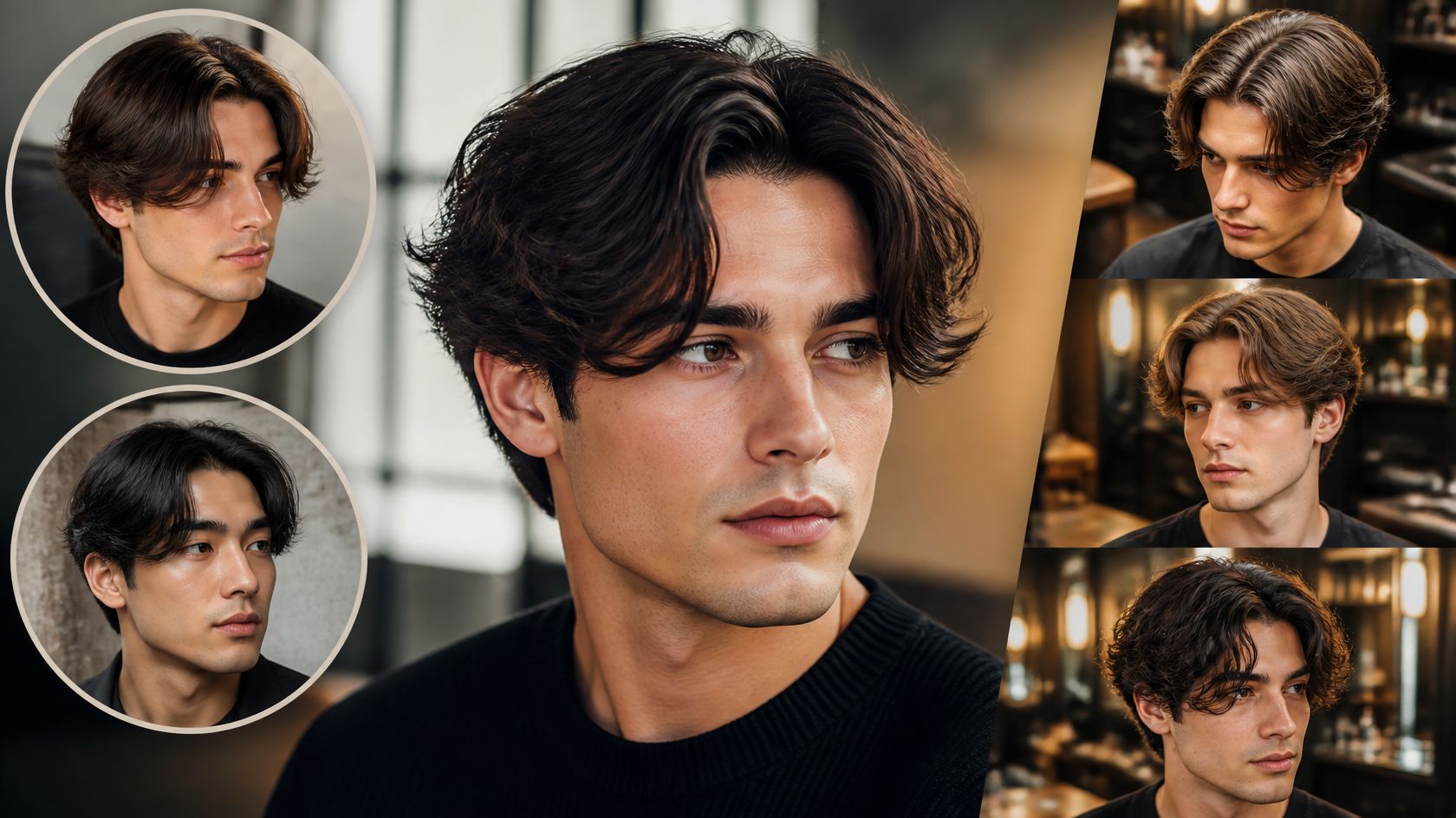
The middle part hairstyle for men is back in a big way for 2026. But today’s version is not limited to the stiff 1990s curtain haircut. Modern middle parts can be short, textured, tapered, curly, messy, slicked back, or inspired by Korean two block cuts.
The biggest advantage is versatility. You can adapt the center part to your hair length, texture, face shape, and personal style. Straight hair gives you a clean and defined part, while wavy and curly hair create a softer, more natural finish. Current men’s hair trends also favor movement and personalized texture instead of overly perfect styling.
This guide covers 18 middle part hairstyles for men in 2026, from short curtain bangs to long flowing curtains. You will also learn which version suits your face shape, what hair types work best, how to train your part, and how to maintain it.
What Are the Best Middle Part Hairstyles for Men?
The best middle part depends on your hair length, density, texture, face shape, and daily styling routine. There is no single version that works equally well for everyone.
For a quick choice:
| Style | Best Hair Type | Best Face Shapes | Maintenance |
| Short Curtain Bangs | Straight, wavy | Oval, heart | Low |
| Middle Part Fade | Straight, thick | Oval, square | Medium |
| Blunt Cut Middle Part | Straight, thick | Oval, diamond | Medium |
| E Boy Middle Part | Straight, wavy | Oval, narrow | Medium |
| Classic Curtains | Straight, wavy | Oval, heart | Low |
| Textured Middle Part | Wavy, thick | Oval, square | Low |
| Korean Middle Part | Straight, thick | Oval, oblong | Medium |
| Middle Part with Taper | Most textures | Oval, square | Low |
| Messy Curtains | Wavy, textured | Oval, heart | Low |
| Middle Part Undercut | Straight, thick | Oval, diamond | High |
| Two Block Middle Part | Straight, thick | Oval, square | Medium |
| Middle Part Flow Curtains | Medium to thick | Oval, oblong | Medium |
| Curly Middle Part | Curly, coily | Oval, heart | Medium |
| Middle Part Perm | Straight, fine | Oval, square | Medium |
| Wolf Cut Middle Part | Wavy, thick | Oval, heart | Medium |
| Slick Back Middle Part | Straight, thick | Oval, square | Medium |
| Middle Part Braids | Textured, natural | Most shapes | Medium |
| Middle Part Mullet | Wavy, straight | Oval, diamond | High |
SHORT STYLES (4 to 5 Inches on Top)
Short Curtain Bangs

Short curtain bangs are one of the easiest ways to try a middle part without growing your hair very long. Keep around 4 to 5 inches on top and leave enough length at the front for the hair to split naturally.
This version works particularly well if you want some forehead coverage. It can also soften a receding hairline because the front sections can fall toward the recession points. GQ’s current men’s hair coverage specifically identifies shorter curtains as a useful option for de emphasizing recession.
For a natural finish, use a lightweight styling cream instead of heavy gel.
Middle Part Fade
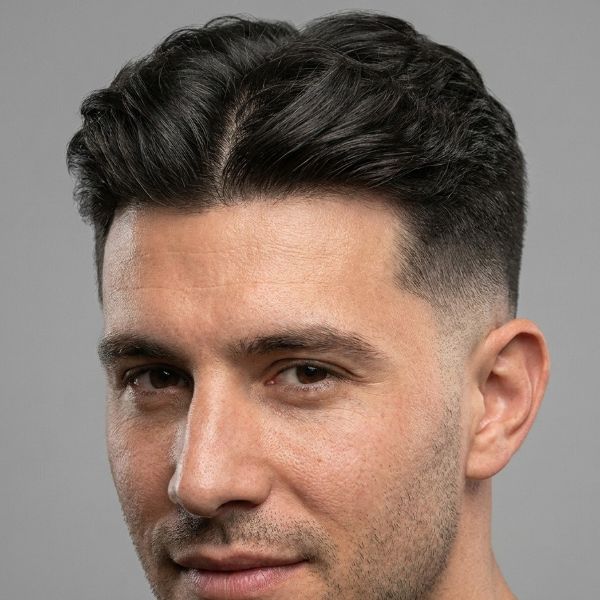
The middle part fade combines longer hair on top with shorter faded sides and back. The contrast makes the center part more noticeable while keeping the overall haircut clean.
A low fade is usually the easiest version to wear because it does not overpower the curtains. If you want more contrast, choose a mid fade. Keep enough length around the front so the hair still frames your face.
This style is especially useful for men who want a contemporary middle part that feels sharper than traditional curtains. Modern curtain cuts commonly incorporate fades and tapers.
Blunt Cut Middle Part
A blunt cut middle part has heavier, cleaner ends instead of heavily feathered layers. It creates a strong silhouette and makes the center split look intentional.
This works best with straight or thick hair because the weight helps the hair fall evenly on both sides. If your hair is very fine, excessive bluntness can make the style look flat.
Ask your barber to retain weight at the front while lightly removing bulk underneath.
E Boy Middle Part
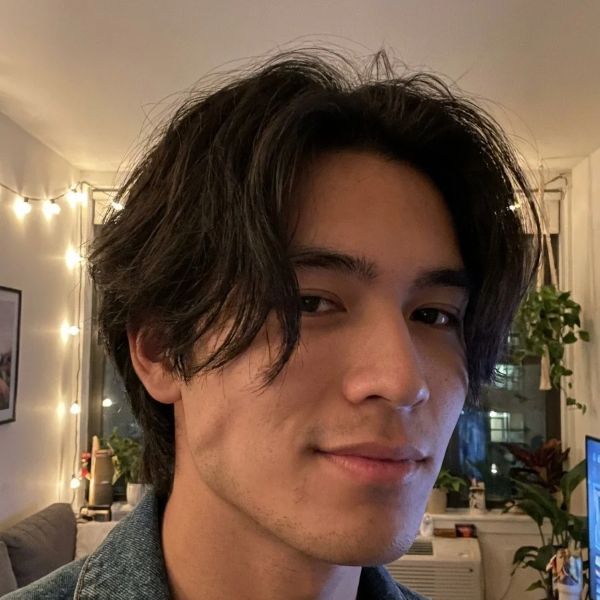
The E Boy middle part became closely associated with social media culture and modern curtain hairstyles. It normally features medium length, face framing strands, texture, and a relaxed center part.
Unlike a formal curtain haircut, this version should not look overly polished. A small amount of texture powder or matte paste can create separation without making the hair stiff.
It is especially effective on straight to wavy hair. FashionBeans notes that modern E Boy curtains have moved toward more personalized texture rather than the rigid parting associated with older versions.
MEDIUM STYLES (5 to 7 Inches on Top)
Classic Curtains
Classic curtains are the foundation of modern middle part hairstyles for men. The hair is parted near the center and allowed to fall naturally toward both sides of the face.
The ideal length is usually enough to reach around the eyebrows, temples, or cheekbones depending on your desired finish. Longer front pieces create a softer curtain effect.
This style has strong 1990s roots but remains relevant because it can be adapted with modern layers, tapers, and natural texture.
Textured Middle Part

A textured middle part is perfect if you dislike perfectly controlled hairstyles. Instead of creating two smooth sections, the barber adds layers and texture so the hair separates naturally.
It works particularly well with thick or wavy hair. Texture prevents the sides from becoming too heavy and gives the hairstyle movement.
For styling, apply a small amount of texture cream or sea salt spray to damp hair. Blow dry with your fingers and finish by separating the strands with your hands.
Korean Middle Part
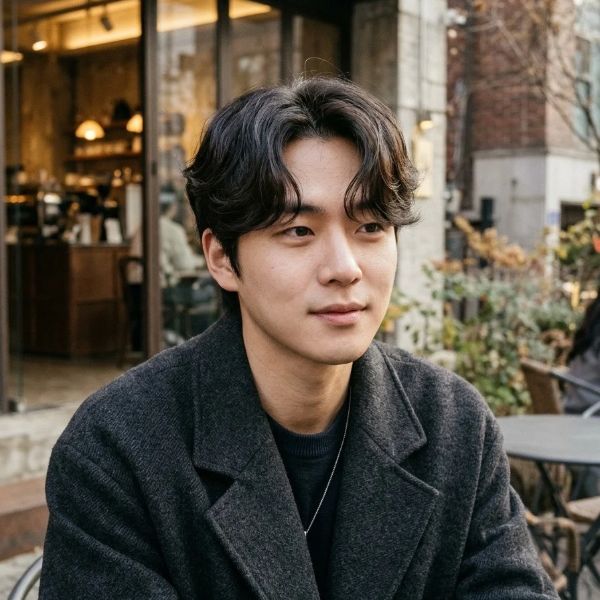
The Korean middle part has become one of the most recognizable modern versions of the hairstyle. It typically uses medium length on top, soft layers, controlled volume, and face framing curtains.
The style often overlaps with the Korean two block haircut, where the top remains longer while the sides and back are considerably shorter. The two block structure can support a middle part while reducing bulk underneath.
Straight and thick hair is especially suitable, but wavy hair can also work when the layers are adjusted to follow the natural texture.
Middle Part with Taper
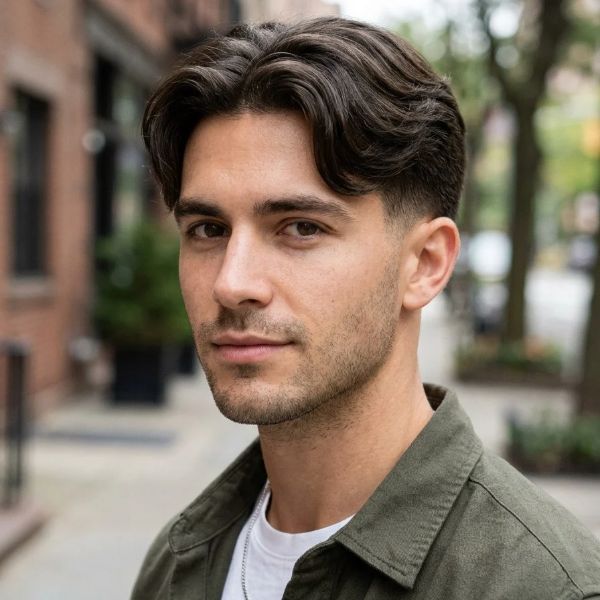
A middle part with a taper is one of the safest choices for men who want a clean but relaxed appearance.
Unlike a dramatic fade, a taper gradually cleans up the sideburns and neckline while leaving more natural weight around the sides. This helps the curtains blend into the haircut.
It is a strong option for school, work, and everyday wear because it can look polished without becoming overly sharp.
Messy Curtains
Messy curtains take the traditional middle part and make it deliberately relaxed. The hair should have movement instead of sitting in two perfectly symmetrical panels.
This works particularly well with naturally wavy or thick hair. A small amount of sea salt spray can enhance natural texture, while a matte cream can control flyaways.
The goal is controlled messiness. Too much product can destroy the soft movement that makes this style attractive.
Middle Part Undercut
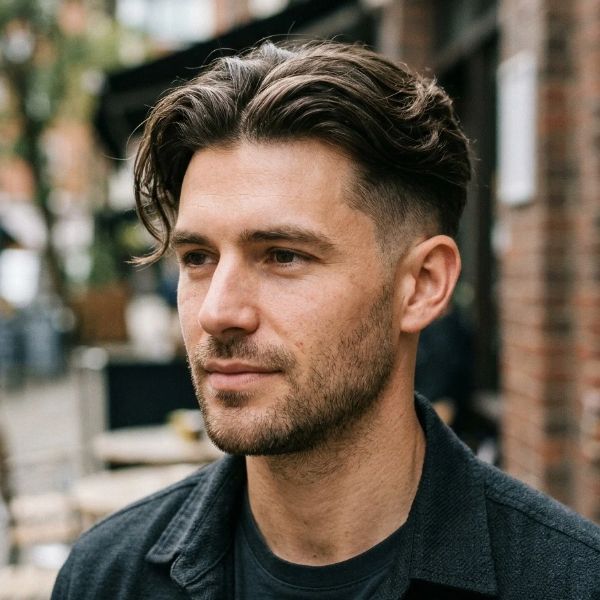
The middle part undercut creates a stronger contrast between the long top and short sides. The sides are disconnected instead of gradually blended into the top.
This makes the curtains stand out dramatically. It is a good choice if you want a bold, fashion focused haircut rather than a conservative office style.
Straight, thick hair usually gives the strongest result because the longer top can sit cleanly over the shorter sides.
Two Block Middle Part
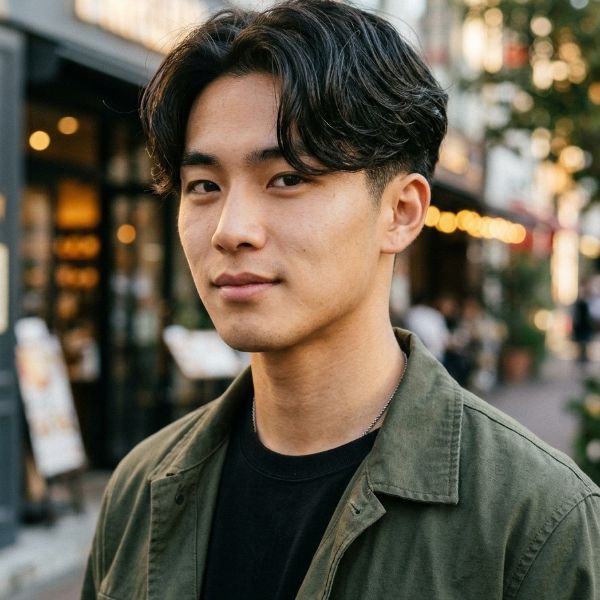
The two block middle part is a Korean inspired variation with a longer upper section and shorter sides and back. The two areas are distinct rather than completely blended.
It has become increasingly popular alongside K pop and Korean men’s grooming. British GQ’s 2026 coverage describes the two block as a longer top over a shorter lower section, with curtains being one of its main styling options.
When asking for this haircut, show your barber a front, side, and back reference. Then specify whether you want a soft or dramatic disconnect.
LONG STYLES (7+ Inches on Top)
Middle Part Flow Curtains
Flow curtains use longer hair that naturally moves away from the center and toward the sides. The result is relaxed, mature, and less structured than short curtains.
This style works especially well with medium to thick hair and natural movement. You can tuck the sides behind your ears when you need a cleaner appearance.
Regular conditioning is important because longer hair can become dry and difficult to control.
Curly Middle Part
A curly middle part is a great way to let natural curls become the main feature of the haircut. Instead of forcing a perfectly straight line, allow the curls to soften the separation.
Longer curls can frame the face and create significant volume. The part may appear less precise than it would on straight hair, which is often part of the appeal. Curly and long middle parts are recognized as flexible options for different textures.
Use curl cream or a lightweight leave in conditioner. Avoid repeatedly brushing dry curls because it can create unnecessary frizz.
Middle Part Perm
A middle part perm adds waves or curls to hair that naturally lacks texture. It can make a flat center part look fuller and more dynamic.
This is particularly useful for fine or straight hair that struggles to hold volume. The important point is choosing a perm pattern that matches your desired curtain shape.
Ask a stylist to create soft movement rather than extremely tight curls if you want a modern men’s middle part.
SPECIALTY STYLES
Wolf Cut Middle Part
The wolf cut middle part combines curtain styling with shaggy layers and a slightly longer back. It has more movement and personality than a traditional curtain haircut.
This version suits thick or wavy hair because natural texture helps the layers separate. It can also work with straight hair when the barber adds enough internal layering.
Keep the fringe long enough to split naturally. Too much weight at the front can make the haircut fall flat.
Slick Back Middle Part
The slick back middle part is a more polished interpretation. Instead of letting the curtains fall forward, the hair is parted centrally and brushed backward.
This creates a sophisticated look suitable for formal occasions. Straight and thick hair makes the style easier, although medium density hair can also work with the right product.
Use a lightweight pomade for control. Avoid excessive product if you want the hair to retain natural movement.
Middle Part Braids
Middle part braids combine a clear center section with braided hair. The style can be adapted to different braid sizes, lengths, and textures.
The clean central division gives the hairstyle structure while the braids create a distinctive finish. This can be especially effective for men who want a protective or low daily styling routine.
Work with a professional braider if you need help choosing braid tension and section size.
Middle Part Mullet
The middle part mullet combines a face framing curtain with shorter sides and a longer back. It gives the classic center part a more rebellious silhouette.
Wavy and textured hair can make the transition look especially natural. Straight hair can create a sharper and more graphic result.
Because the shape depends heavily on the balance between the front and back, bring reference photos when visiting your barber.
Which Middle Part Suits Your Face Shape?
Your face shape should influence the length, volume, and width of your middle part rather than determine whether you can wear one.
| Face Shape | Best Middle Part | Styling Tip |
| Oval | Almost all versions | Keep natural proportions |
| Round | Textured curtains, taper | Add height and avoid excessive side bulk |
| Square | Classic curtains, two block | Use texture to soften strong angles |
| Heart | Longer curtains, messy styles | Keep weight around the jaw |
| Oblong | Wavy curtains, layered styles | Avoid excessive height on top |
| Diamond | Textured or flow curtains | Add width around the cheek and jaw area |
Oval faces offer the most flexibility. Round faces often benefit from some vertical volume, while oblong faces can look better with wider, layered curtains rather than excessive height.
The goal is balance. A good barber should adjust the haircut around your facial proportions instead of simply copying a reference photo.
Which Hair Type Works Best with a Middle Part?
Straight hair is usually the easiest to part because the center line remains visible and the hair falls predictably. However, wavy hair can produce a more relaxed and natural result.
Thick hair benefits from layering and texturizing because too much weight can make the curtains expand at the sides. Fine hair may need lightweight volumizing products to prevent the style from appearing flat.
Curly hair can absolutely support a middle part. The part will usually look softer and less geometric because the curl pattern interrupts the line.
For very fine, tightly coiled, or difficult growth patterns, ask your barber to adapt the shape instead of forcing a standard curtain cut. Current two block guidance similarly emphasizes adjusting the structure to natural texture and growth direction rather than treating one haircut as universal.
How Do You Maintain a Middle Part?
A middle part is easier to maintain when the haircut is designed around your natural growth pattern.
Follow these steps:
- Wash and condition according to your hair type.
- Towel dry until the hair is damp.
- Find the natural center using a comb.
- Create the part from the front toward the crown.
- Apply a small amount of lightweight styling product.
- Blow dry each side away from the center if you need extra volume.
- Finish with your fingers instead of repeatedly combing the dry hair.
- Trim the shape every 4 to 6 weeks when keeping fades, tapers, or short sides.
A useful trick is to train the part while the hair is wet. Set the center line, direct both sides away from it, and let the hair dry in that position. Repeating the process helps make the part easier to style.
Do not overload the hair with gel or pomade. Heavy products can make curtains look stiff and greasy. Lightweight cream, texture spray, mousse, or matte paste is usually easier to control.
FAQ
Does a middle part work for receding hairlines?
Yes. A middle part can soften some recession by allowing longer front sections to frame the temples, although advanced hair loss may require a different cut.
How long does it take to train hair for a middle part?
Many men can establish a more cooperative part within a few weeks by repeatedly styling it while damp, although your natural growth direction affects the process.
Can you get a middle part with a cowlick?
Yes. Ask your barber to work with the cowlick instead of cutting against it, and use blow drying to direct the hair into the desired shape.
Does a middle part make your face look wider?
It can. Heavy volume at the sides may visually widen a round or short face, while controlled layers and extra height can create a more balanced appearance.
What happens if you get a middle part with the wrong face shape?
The haircut may exaggerate width, length, or facial angles. Adjusting the curtain length, side volume, layers, and taper can usually improve the proportions.
Should you get a middle part if your hair parts naturally to one side?
You can, but do not fight your natural growth pattern too aggressively. A slightly off center part may look more natural and require less daily styling.
Final Thoughts
The best middle part hairstyle for men in 2026 is the one that works with your natural hair rather than against it. Straight hair can create sharp curtains, while waves and curls give the style softer movement.
For a clean everyday haircut, try a middle part with a taper. For a stronger fashion statement, consider a two block, undercut, wolf cut, or middle part mullet. If you want something timeless, classic curtains remain an excellent choice.
Before your next haircut, think about three things: your face shape, your natural hair texture, and how much time you want to spend styling. Bring clear reference photos and tell your barber the length you want to keep on top. That combination will give you a much better result than simply asking for a “middle part.”