

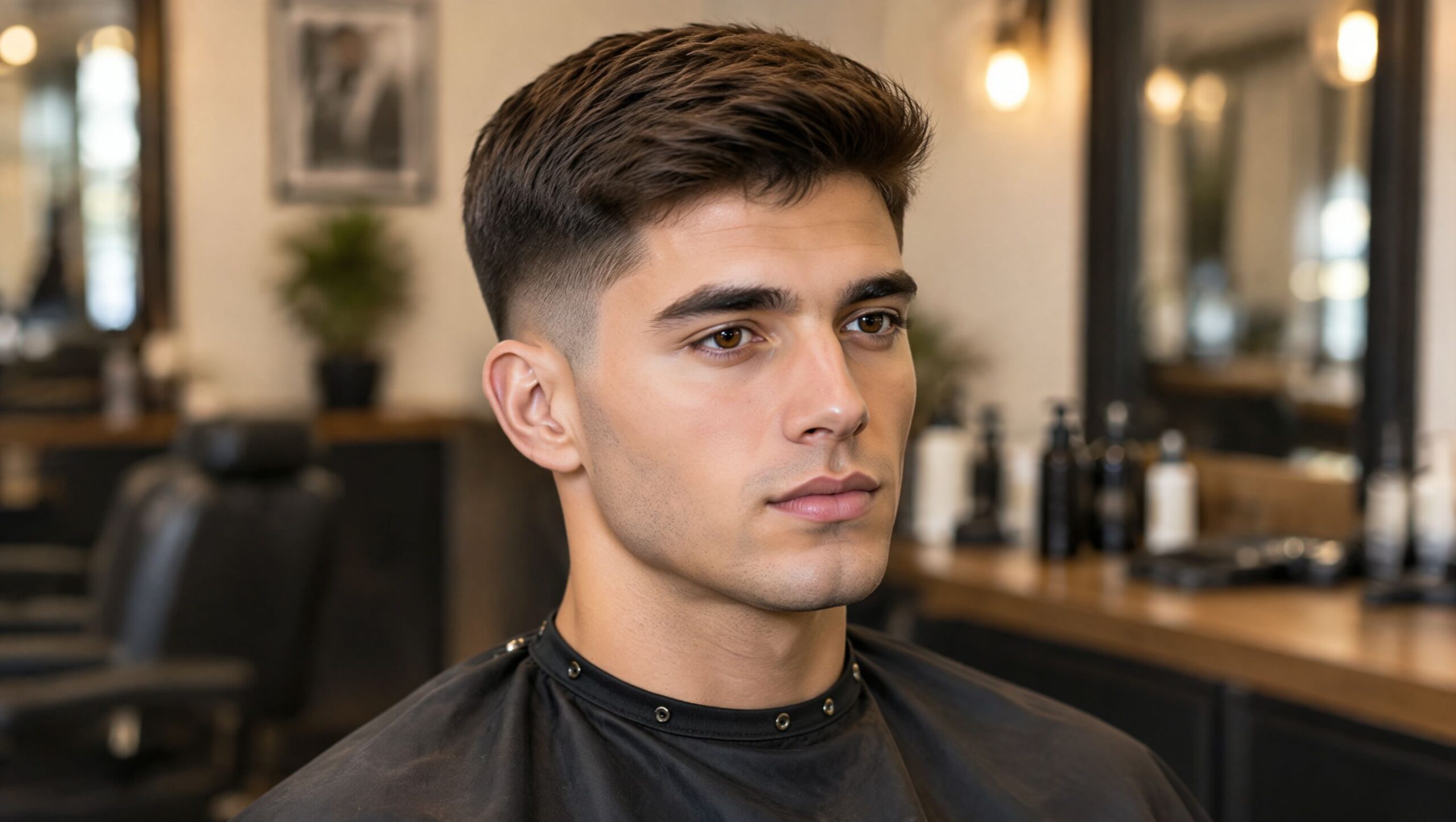
The low taper fade haircut for straight hair is a clean, versatile hairstyle that combines neatly tapered sides with a longer, customizable top. It works well for men who want a modern appearance without an overly dramatic fade. Whether your hair is short, medium, thick, or fine, this haircut offers plenty of styling options for everyday wear.
In 2026, natural texture, soft blending, and personalized haircuts remain useful directions to consider when choosing a low taper fade. You can pair it with a textured fringe, classic side part, slick back, middle part, or short crew cut. The right variation depends on your hair density, face shape, lifestyle, and preferred maintenance routine.
This complete guide explains what a low taper fade is, how it differs from similar haircuts, which styles work best with straight hair, and what to tell your barber. You will also learn how to style your haircut at home and keep it looking fresh between appointments.
What Is a Low Taper Fade?
A low taper fade is a men’s haircut that gradually shortens the hair around the sideburns and neckline. The transition begins close to the ears and lower back of the head. The hair above these areas generally remains longer, creating a balanced appearance.
The word low describes the position of the fade. Instead of rising toward the temples, the blend stays near the lower edges of the haircut. This preserves more hair on the sides and creates a subtle contrast between the top and the shorter areas.
A barber typically uses clippers, different guard lengths, and careful blending to create the transition. The shortest area can finish at a very short guard or near the skin, depending on the look you request. The exact technique varies by barber and desired finish.
A low taper fade is especially adaptable because the top can be cut in several ways. You can choose a neat business haircut, a textured casual style, or a longer fashion-forward look without changing the basic taper.
Quick answer: A low taper fade for straight hair keeps the sides and neckline short and gradually blended while leaving the top longer for styling. It is a good choice for men who want a neat, modern haircut with flexible styling options.
Why Straight Hair Suits This Cut
Straight hair provides a smooth surface that makes a carefully blended taper easy to see. When the barber creates a gradual transition between lengths, the clean lines can make the haircut look particularly polished.
Another advantage is versatility. Straight hair can be combed forward, brushed upward, parted to either side, or swept backward. The same low taper can therefore support several different styles as your preferences change.
However, straight hair can also reveal uneven blending more clearly than textured hair. Fine strands may fall flat, while thick strands can stick outward around the ears. Choosing the right top length and removing excess bulk where necessary can improve the result.
Here are the main benefits:
- Clean appearance: The tapered edges create a neat outline around the ears and neckline.
- Flexible styling: Straight hair can support crops, side parts, quiffs, and slick backs.
- Professional finish: A subtle taper can suit offices, schools, and formal occasions.
- Easy daily routine: Shorter sides reduce the amount of hair you need to manage.
- Personalized shape: Your barber can adjust the top to complement your face and hair density.
The most important factor is not simply having straight hair. It is choosing a cut that works with your natural growth direction, strand thickness, and preferred styling effort.
Low Taper Fade vs Low Fade vs Taper
These haircut names are sometimes used interchangeably, but they do not always describe the same result. Understanding the differences helps you explain exactly what you want at the barbershop.
| Haircut | Main characteristic | Overall appearance | Best for |
| Low taper fade | Short graduation around the sideburns and neckline | Subtle and controlled | Men who want a neat, versatile cut |
| Low fade | Short hair blends upward across a broader area of the lower sides | More visible contrast | Men who prefer a sharper finish |
| Classic taper | Hair gradually shortens around the edges without necessarily reaching the skin | Natural and conservative | Traditional and professional styles |
| Mid taper fade | The taper sits higher around the temples and neckline | More noticeable shaping | Men who want stronger definition |
| High fade | Shortness extends higher up the sides | Bold and high contrast | Modern, striking hairstyles |
A low taper fade is a useful middle ground when you want clean edges without removing too much hair from the sides. A conventional low fade may cover a wider section of the head, depending on the barber’s technique.
Remember that terminology varies between barbershops. One barber may use low taper for a narrow blend around the edges, while another may use low taper fade more broadly. A reference photograph and a clear description are often more reliable than the name alone.
Best Top Styles for Straight Hair in 2026
The top determines much of the haircut’s personality. You can keep it short and understated or leave extra length for movement and volume.
1. Textured Fringe

A textured fringe brings the hair forward over the forehead. The barber adds variation to the top so it does not appear like a solid, flat block.
This option works well for casual settings and men who prefer a modern, relaxed appearance. A small amount of matte clay or paste can separate the strands without making them look greasy.
2. Classic Side Part

The side part is one of the most versatile combinations with a low taper fade. The top is combed toward one side, creating a tidy shape that works for professional and formal environments.
Fine or medium-density straight hair can benefit from a lightweight styling cream. Thicker hair may need a stronger-hold product to keep the part in place.
3. Slick Back
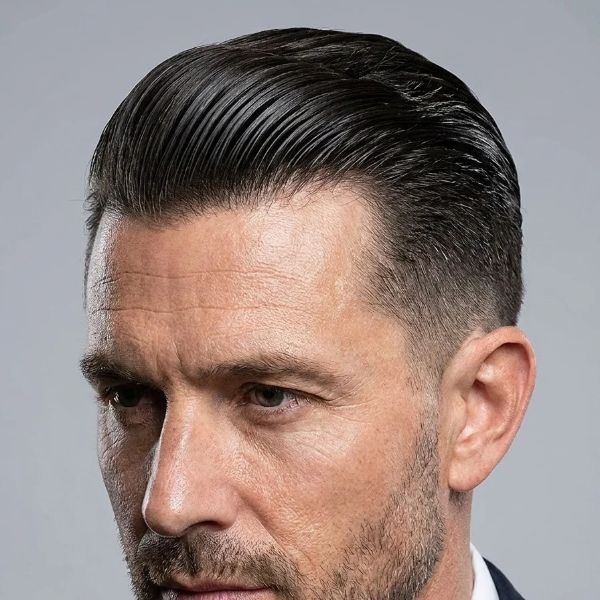
The slick back directs the top away from the forehead. It creates a refined appearance and works particularly well when you have enough length to control the hair.
Use a blow-dryer and a small amount of pomade or styling cream. Avoid applying too much product, especially if your hair is fine, because excess weight can make the top look oily or flat.
4. Middle Part or Curtains

A middle part divides the hair into two sections that fall toward either side of the face. It is a useful choice for medium or long straight hair.
Ask your barber to preserve enough length around the front to create the desired curtain effect. A lightweight cream can help control flyaways while maintaining natural movement.
5. Textured Quiff
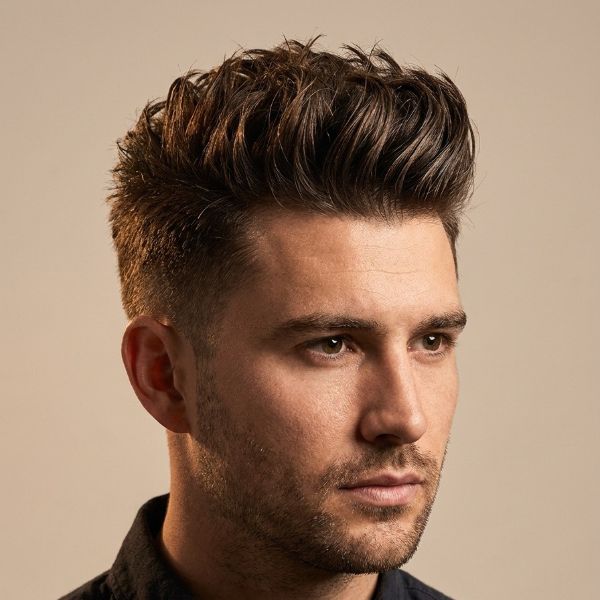
A quiff lifts the front of the hair while keeping the rest of the top controlled. The height creates a more noticeable profile and can make a round face appear visually longer.
This style generally works best when straight hair has enough density to hold some volume. A blow-dryer, vent brush, and moderate-hold product can help create the lift.
6. Short Crew Cut

A crew cut keeps the top relatively short and easy to manage. Paired with a low taper fade, it creates a clean, practical haircut that requires little daily styling.
This is a sensible option for active lifestyles, busy mornings, and men who prefer a conservative look. A small amount of matte product is optional rather than essential.
7. French Crop
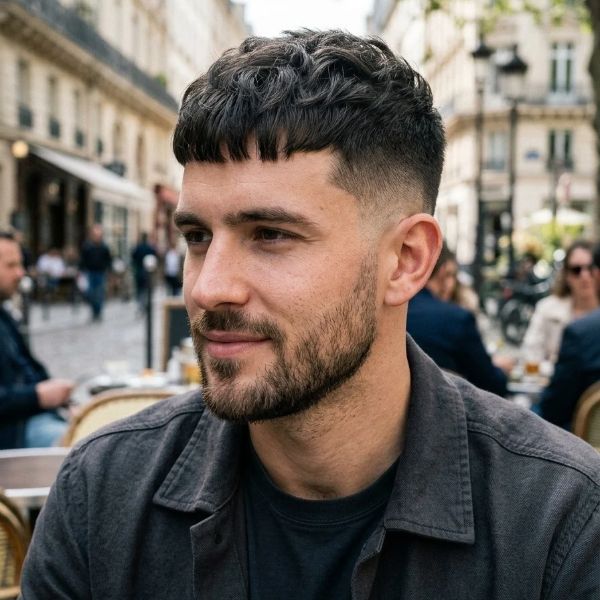
The French crop features a short top and a forward fringe. Light texture prevents the style from looking too uniform, while the low taper keeps the edges neat.
It is particularly useful for men who want a simple haircut without the daily effort required by longer styles.
8. Natural Brush-Up
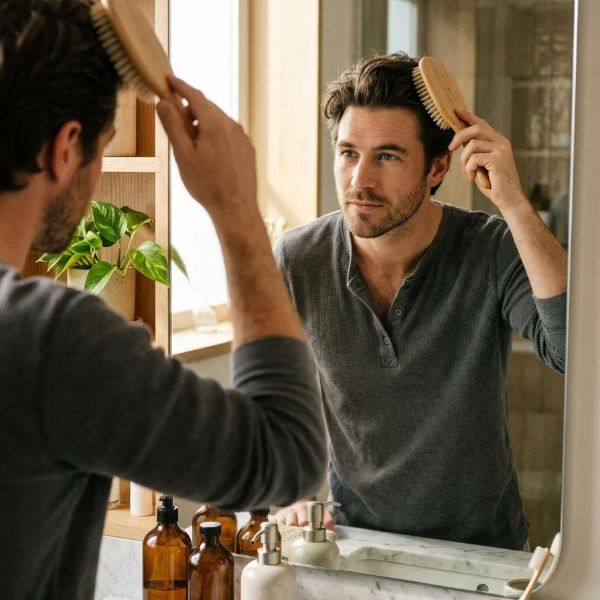
The brush-up lifts the hair slightly away from the forehead without creating the pronounced height of a quiff. It gives straight hair more shape while maintaining a natural finish.
Use a lightweight mousse or texture spray before blow-drying. If your hair is very fine, keep the lift moderate to avoid exposing too much scalp.
9. Short Textured Spikes
Short spikes add separation and definition to straight hair. The top is kept short enough to style with the fingers, making this a practical option for men who like a youthful, casual look.
A small amount of matte paste usually provides enough control without making the hair stiff or excessively shiny.
Best Face Shapes and Hair Types
A low taper fade can be adjusted to suit many face shapes. The key is balancing the top’s height, the amount of length left at the sides, and the overall proportions.
| Face shape or hair type | Recommended style | Why it works |
| Oval face | Side part, crop, or slick back | Supports many different proportions |
| Round face | Quiff or brush-up | Adds vertical emphasis |
| Square face | Textured crop or classic side part | Complements a defined jawline |
| Long face | Fringe or low-volume side part | Avoids excessive height |
| Heart-shaped face | Middle part or textured fringe | Can balance a broader forehead |
| Fine straight hair | Short crop or textured fringe | Creates the appearance of separation |
| Thick straight hair | Quiff, side part, or textured top | Gives dense hair a controlled shape |
| Medium-density hair | Classic taper with a side sweep | Offers flexibility without excessive bulk |
These are starting points, not strict rules. Personal preference, hairline, head shape, and natural growth patterns matter just as much as face shape.
Fine or Thin Straight Hair
Fine hair often looks best with moderate top length and light styling products. Excessive length can make the strands separate and reveal more scalp, especially when the hair becomes oily.
A textured crop, short fringe, or modest brush-up can add the appearance of volume. Ask your barber to avoid removing too much density from the top.
Thick Straight Hair
Thick hair can create excellent shape, but it may puff outward above the ears. A barber can remove some bulk using suitable scissor techniques while preserving the low taper.
Avoid making the sides extremely short unless you want a stronger contrast. Keeping some length above the taper can help the haircut look balanced as it grows.
Naturally Flat or Resistant Hair
Some straight hair naturally falls close to the scalp or grows in a direction that resists styling. A shorter top, light mousse, and careful blow-drying can make the hair easier to control.
Your barber should consider your natural part and growth direction before deciding where to create texture.
How to Ask Your Barber for a Clean Low Taper Fade
Clear instructions can help prevent misunderstandings. Instead of simply asking for a fade, explain where you want it to start, how short the edges should be, and how much length you want to keep on top.
You can use this description:
“I want a low taper fade around the sideburns and neckline. Keep the blend low and smooth, leave enough length on the sides to maintain a natural shape, and preserve the top for a textured style. Please check the balance around my ears and neckline before finishing.”
Adjust that request to match your preferred haircut.
Before the barber starts, discuss these details:
- Fade height: Explain that you want the blend low rather than extending toward the temples.
- Shortest length: Decide whether you prefer a short clipper guard or a closer finish near the skin.
- Top length: Give an approximate length in inches or centimetres, or show a photograph.
- Side bulk: If your hair sticks outward, ask whether removing some weight above the ears would help.
- Hairline and neckline: Discuss whether you prefer a natural edge or a more defined outline.
- Final styling: Tell your barber whether you normally wear your hair forward, parted, or brushed back.
Guard numbers can help, but they should not be treated as universal measurements. Different clipper systems and barber techniques produce different results. Ask your barber to confirm the intended length before cutting.
Short, Medium, and Long Variations
A low taper fade works with different top lengths. Your ideal option depends on how much styling flexibility you want and how much time you are willing to spend getting ready.
Short Variation
A short top, usually around 1 to 2 inches, suits crew cuts, short crops, and textured spikes. It is easy to wash and style, and it keeps the overall haircut understated.
This length is especially practical if you exercise regularly or prefer a low-effort morning routine. You may need little or no styling product.
Medium Variation
A medium top, around 2 to 4 inches, offers the greatest flexibility for many straight-haired men. You can create a side part, textured fringe, quiff, or brushed-back style without changing the basic cut.
This is a good starting point if you are unsure which style suits you best. It provides enough length to experiment while remaining relatively manageable.
Long Variation
A longer top, around 4 inches or more, supports curtains, loose flow, and a more substantial slick back. The contrast between the longer top and tidy edges can create a distinctive appearance.
Longer straight hair usually requires more attention to shape, flyaways, and volume. Tell your barber how you plan to wear it before deciding how much length to remove.
How to Style It
A low taper fade haircut for straight hair does not need a complicated styling routine. The right technique depends on your top length and the finish you prefer.
Follow these steps for an everyday style:
- Start with clean hair. Wash when needed and gently towel-dry to remove excess water.
- Apply a lightweight base product. Use mousse or heat protectant if you plan to blow-dry.
- Direct the hair. Use your fingers, a comb, or a brush to guide the top into your preferred shape.
- Blow-dry with control. Use moderate heat and direct airflow in the direction you want the hair to sit.
- Add a finishing product. Work a small amount of clay, cream, or pomade through the hair.
- Check the silhouette. Make sure the top and sides look balanced from the front and both profiles.
For a textured finish, use your fingers instead of combing every strand into place. For a classic side part or slick back, use a comb to create a cleaner direction.
Avoid applying too much product at once. Start with a small amount and add more only if necessary.
Best Products for Straight Hair
The best styling product depends on your hair thickness, desired hold, and preferred finish. You do not need every product listed below. One suitable styling product and a reliable blow-dryer may be enough.
| Product | Best use | Finish | Helpful tip |
| Matte clay | Textured crops and messy styles | Natural or matte | Start with a small amount |
| Matte paste | Short spikes and separated strands | Low shine | Warm it between your palms |
| Lightweight styling cream | Side parts and longer hair | Soft and natural | Useful for controlling flyaways |
| Pomade | Slick backs and defined parts | Varies by formula | Choose hold and shine to suit your style |
| Volumizing mousse | Fine or flat hair | Lightweight lift | Apply before blow-drying |
| Texture spray | Brush-ups and relaxed styles | Textured | Avoid overapplying to dry hair |
| Heat protectant | Blow-dried hairstyles | Usually minimal visible finish | Follow the product instructions |
For fine straight hair, lightweight formulas are often a sensible choice because heavy products can reduce volume. Thick straight hair may need a stronger hold to control stubborn strands.
Choose products according to your scalp and hair’s needs. If a product causes irritation or persistent discomfort, stop using it.
How to Maintain It at Home
A low taper fade can grow out neatly, but the shortest areas gradually lose their definition. Regular maintenance keeps the outline balanced without requiring a full haircut every week.
For many people, a barber visit every 2 to 4 weeks is a reasonable starting point. Your ideal schedule depends on how short the fade is, how quickly your hair grows, and how precise you want the edges to look.
Use this simple maintenance routine:
- Wash your hair as needed rather than automatically using harsh shampoo every day.
- Condition the top if it feels dry or difficult to manage.
- Brush or comb your hair gently to maintain its intended direction.
- Use a small amount of styling product to control flyaways.
- Keep the neckline and sideburns tidy between appointments.
- Take a reference photograph if you want the barber to repeat the same shape.
Be cautious when trimming the fade yourself. Small mistakes around the ears or neckline can become obvious, particularly with straight hair. If you use clippers at home, make only minor adjustments that you are comfortable performing.
Do not repeatedly push the hairline farther back while cleaning up the edges. This can change the original shape and make future appointments more difficult.
Common Mistakes to Avoid
Even a simple haircut can look disappointing when the proportions are wrong. Avoiding a few common mistakes can help you get a better result.
Choosing the wrong fade height: A fade that rises too high may remove more side coverage than you intended. Confirm the placement before the barber begins.
Leaving too much bulk above the ears: Thick straight hair can stick outward as it grows. Discuss weight removal without asking for unnecessarily short sides.
Making fine hair too long: Excessive length can cause fine strands to lie flat. Choose a top length that gives you enough styling options without sacrificing shape.
Using too much product: Heavy waxes and creams can make straight hair look greasy. Begin with a small amount and build up only if needed.
Ignoring natural growth patterns: Hair that grows forward or toward one side may resist a style that looks easy in a photograph. Choose a cut that works with your natural direction.
Expecting a photograph to guarantee the same result: Hair density, head shape, and hairline differ from person to person. Use reference photos to communicate the look, not as a promise of identical results.
Waiting too long between trims: A low taper can lose its definition as the sideburns and neckline grow. Schedule maintenance according to your preferred level of sharpness.
FAQs About the Low Taper Fade for Straight Hair
Is a low taper fade good for straight hair?
Yes. Straight hair can show the gradual blend clearly, and the longer top works with styles such as side parts, textured crops, quiffs, and slick backs.
How long should the top be for a low taper fade?
Around 2 to 4 inches is a versatile starting point for many styles. Short crops need less length, while curtains and longer slick backs require more.
Does a low taper fade suit thin straight hair?
Yes. A short textured crop, fringe, or modest brush-up can work well with fine hair. Lightweight products help maintain volume without weighing the strands down.
How often should I get a low taper fade trimmed?
Many people schedule a trim every 2 to 4 weeks. Shorter, sharper fades may need more frequent appointments to maintain their original outline.
What is the difference between a low taper and a low taper fade?
The terms often overlap in everyday barber language. A taper gradually shortens the edges, while a fade emphasizes a smooth transition into very short hair or the skin.
Can I get a low taper fade with long straight hair?
Yes. A low taper can complement longer straight hair styled into curtains, loose flow, or a slick back. The barber should preserve the length needed for your chosen style.
What is the best product for a low taper fade with straight hair?
Matte clay or paste works well for texture, while lightweight cream suits softer styles. Mousse can help add volume to fine hair before blow-drying.
Is a low taper fade professional enough for work?
Yes. Its low placement and clean outline can suit professional environments, especially when paired with a side part, short crop, or controlled slick back.
Can I maintain a low taper fade at home?
You can manage daily styling and basic grooming at home. However, precise fading around the ears and neckline is easier with the right tools and barber experience.
Want More Taper Fade Guides?
If you are exploring different versions of this haircut, consider how the fade height changes the overall result. A mid taper fade creates a more noticeable transition, while a high fade produces stronger contrast. A low drop fade follows a curved shape behind the ear, creating a different profile.
You can also explore haircut combinations based on the top rather than the fade itself. A low taper with a textured fringe offers a relaxed finish, while a slick back or side part creates a more polished appearance. A crew cut or short crop is a practical choice if easy maintenance is your priority.
Before choosing your next style, consider your hair density, face shape, natural growth direction, and daily routine. Saving two or three reference photographs can help your barber understand the length, texture, and outline you prefer.
Conclusion
The low taper fade haircut for straight hair is a versatile option for men who want clean edges, a balanced silhouette, and freedom to style the top in different ways. Its subtle placement works for everyday wear, professional settings, and more modern looks. Choosing the right top length and fade height is more important than following a trend without considering your own hair.
For the best result in 2026, communicate clearly with your barber, choose products that suit your hair density, and maintain the cut before the edges lose their shape. Whether you prefer a short crew cut, textured fringe, classic side part, or longer middle part, a well-planned low taper fade can provide a clean foundation for your personal style.