

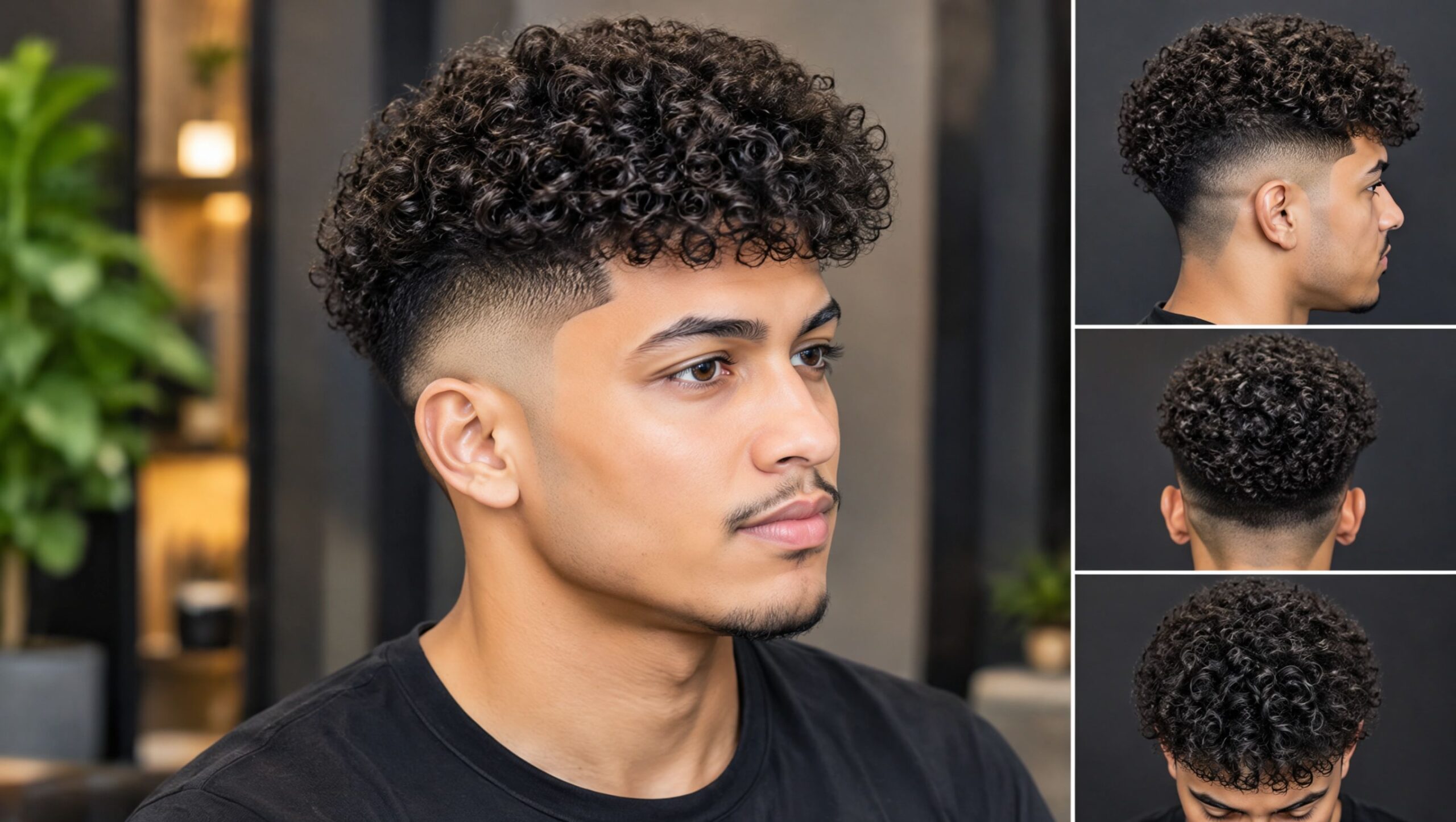
Curly hair can look amazing with the right haircut, but the wrong taper can quickly make the sides look bulky or uneven. A mid taper fade curly hair style solves that problem by cleaning up the temples, sideburns, and neckline while keeping the natural curl pattern on top.
The key is balance. Your curls need enough length to form their natural shape, while the tapered areas need enough contrast to create a clean outline. Curl type, density, shrinkage, top length, and the desired finish all affect the final result.
This guide explains what a mid taper is, how it compares with low and high tapers, which curly styles work best, what to tell your barber, and how to maintain the haircut between appointments.
What Is a Mid Taper Fade on Curly Hair?
A mid taper fade on curly hair gradually shortens the hair around the temple, sideburns, and neckline while leaving more length through the upper sides and curly top.
The word mid describes the placement of the taper. It generally sits around the middle area of the temple rather than very close to the ear or very high on the head.
This creates a useful middle ground. You get cleaner edges and noticeable contrast without removing too much of the side volume that helps curly hair maintain its shape.
The top can be short, medium, or long. The barber can also finish the shortest area with a shadow, guard length, or skin-level finish. These are separate decisions from the taper height.
Mid Taper vs. Mid Fade: Why the Names Get Confused
A mid taper and a mid fade are related but not identical. A taper usually concentrates the shortest hair around the temple, sideburns, and neckline. A traditional mid fade removes a wider section of hair from the sides.
| Feature | Mid Taper | Mid Fade |
| Shortest area | Temples, sideburns, neckline | Wider side area |
| Side weight | More retained | More removed |
| Overall look | Natural and balanced | Stronger and sharper |
| Curly top | Usually preserved | Usually preserved |
| Contrast | Moderate | Higher |
| Grow-out | Often softer | More noticeable |
The terminology can vary between barbershops. That is why a reference photo is often more useful than simply saying “mid taper fade.”
For the clearest result, explain where you want the taper to begin and how much side weight you want to keep.
Mid Taper vs. Low and High Tapers on Curly Hair
The biggest difference between low, mid, and high tapers is placement. Moving the taper upward changes how much hair remains around the sides and how dramatic the haircut looks.
Curly hair makes this difference more noticeable because curls naturally create width. A higher taper can produce stronger contrast, while a lower taper preserves more of the natural silhouette.
| Taper | Placement | Curly Hair Result |
| Low taper | Lower around the ears | Soft and conservative |
| Mid taper | Around the middle temple area | Balanced and versatile |
| High taper | Higher toward the upper temple | Bold and high contrast |
Low Taper vs. Mid Taper on Curly Hair
A low taper keeps more hair around the sides. It is a good choice if you want your curls to create a fuller, softer silhouette.
A mid taper removes more visual bulk around the temple area. This can make dense curls look more controlled without completely changing the shape of the haircut.
Choose a low taper if you prefer a subtle finish. Choose a mid taper if you want your curls to stand out against a cleaner frame.
Mid Taper vs. High Taper
A high taper creates more contrast because the transition begins higher on the head. It can look especially strong with dense curls, coils, or tightly textured hair.
A mid taper is usually easier to balance. It gives the haircut definition without making the upper curls appear excessively large.
If you are trying a taper for the first time, a mid placement can be a practical starting point. You can always move the taper higher during a later haircut, but once substantial side weight has been removed, you cannot immediately add it back.
Is a Mid Taper Good for Your Curly Hair?
Yes. A mid taper can work extremely well with curly hair because it removes unnecessary perimeter bulk while preserving the texture that makes the hairstyle distinctive.
It can also make daily styling easier. Instead of trying to control thick curls around the ears and neckline, you have a cleaner outline that requires less attention.
The best result depends on your hair density and curl pattern. A barber should also consider the direction in which your curls grow and how much your hair shrinks as it dries.
Loose Curls, Tight Curls, and Coily Hair
Loose curls usually benefit from keeping enough length on top to show their natural movement. Removing too much from the sides can make the top appear disproportionately wide.
Tight curls can handle stronger contrast because the texture naturally creates density and shape. A mid taper can make the curl pattern look more defined by creating a clean border around it.
Coily and afro-textured hair can also pair beautifully with a mid taper. The goal should be to shape the perimeter without unnecessarily disturbing the natural volume and structure of the top.
Short, Medium, or Long Curls on Top
Short curls: Easy to manage and low maintenance. The taper becomes a major part of the haircut’s visual impact.
Medium curls: Often the most versatile option. You have enough length for definition, fringe, volume, or textured styling.
Long curls: Create a stronger contrast with the tapered sides. The taper should usually remain controlled so the top does not appear disconnected from the sides.
One important point is shrinkage. Curly hair can look significantly shorter when dry than when wet. Your barber should consider the final dry shape before removing too much length.
Best Mid Taper Fade Curly Hair Styles
There is no single way to wear this haircut. The best version depends on your curl length, styling habits, and preferred level of contrast.
1. Classic Curly Mid Taper
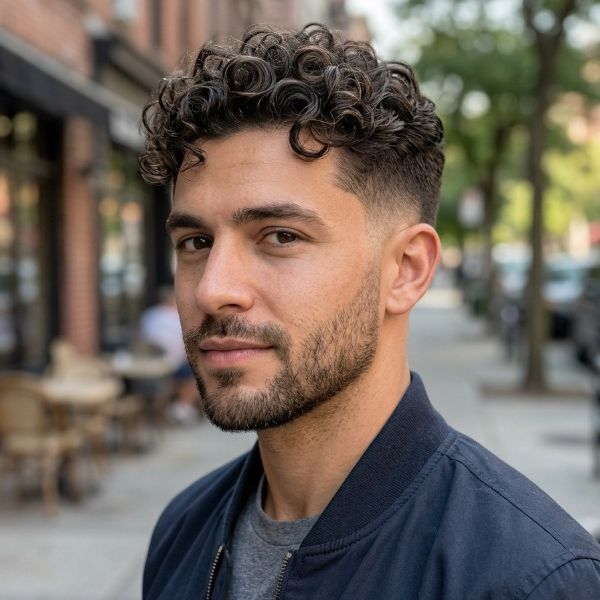
The classic version keeps naturally defined curls on top with a clean mid taper around the temples and neckline.
It is versatile enough for everyday wear, work, school, or casual settings. It is also a smart choice if you want to try the haircut without committing to an extreme change.
2. Mid Taper With Curly Fringe
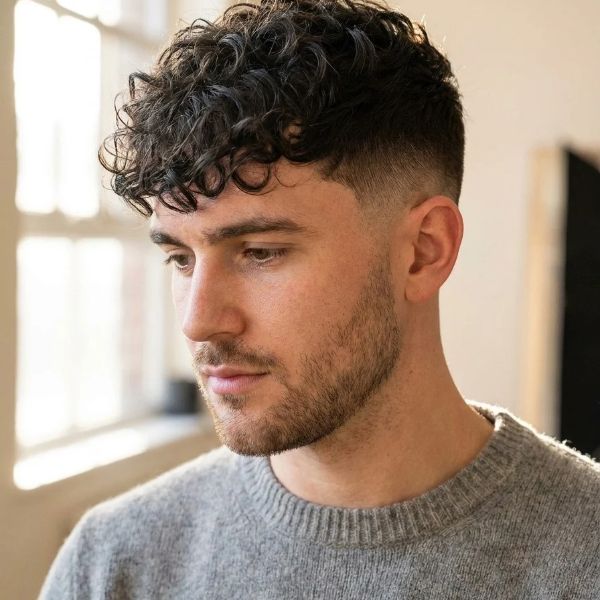
This style leaves extra length at the front so the curls fall toward the forehead.
The fringe can be soft and irregular or more deliberately shaped. Tell your barber how much forehead coverage you want because fringe length can dramatically change the overall appearance.
3. Curly Blowout Mid Taper
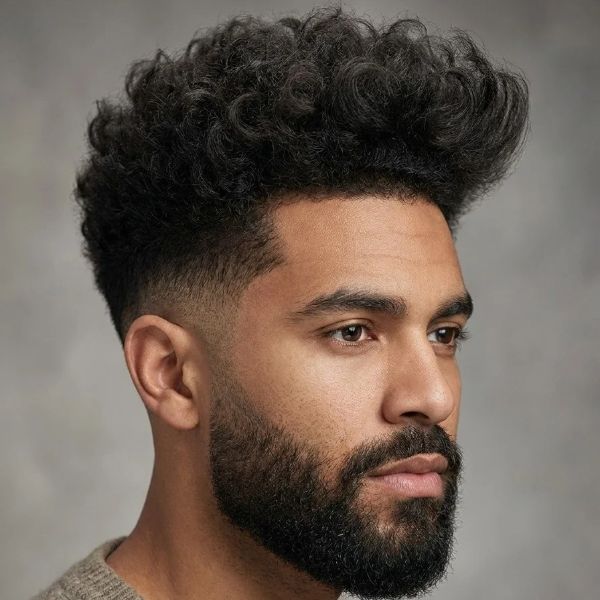
A curly blowout adds height and volume to the top while the mid taper keeps the perimeter controlled.
Use a diffuser or low-heat dryer to lift the curls without destroying their natural pattern. This style is more dramatic and usually needs more styling than a simple curly taper.
4. Short Curly Mid Taper
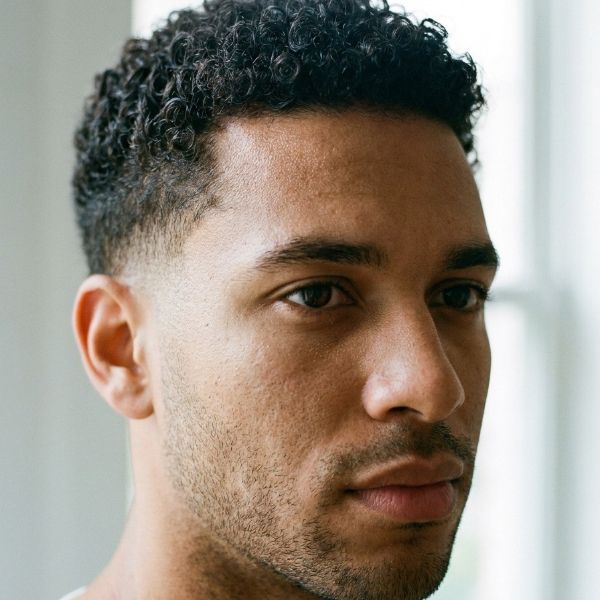
A short curly mid taper keeps the curls close to the head.
It is ideal if you want a haircut that takes very little time to style. A small amount of curl cream or lightweight styling product may be enough.
5. Mid Taper With Coily or Afro-Textured Hair
This version combines a clean tapered perimeter with the natural volume of coils.
The barber should work with the existing shape rather than trying to flatten the crown. A well-executed taper can sharpen the silhouette while allowing the natural texture to remain the main feature.
6. Mid Taper With Line-Up or Beard Blend
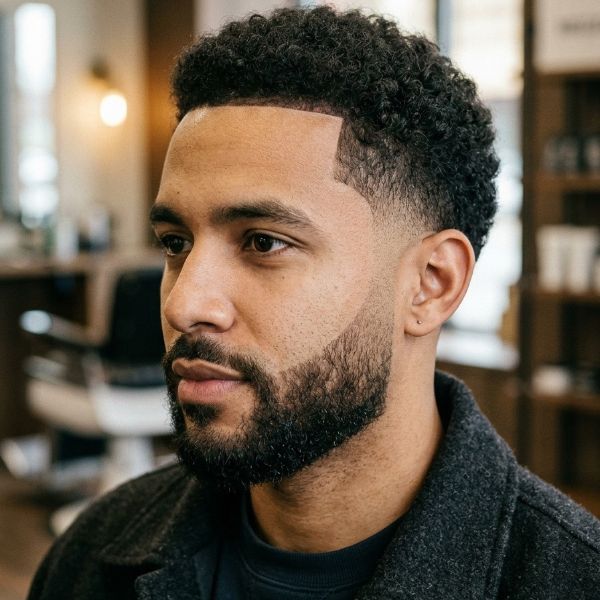
A line-up adds sharper definition around the forehead and temples. A beard blend can connect the sideburn area with facial hair for a more continuous appearance.
These details look crisp but require more frequent cleanup. If you prefer a softer grow-out, ask for natural edges instead of an extremely sharp line.
What Should You Ask Your Barber For?
Do not rely on the phrase “mid taper fade” alone. Give your barber specific instructions about height, finish, top length, and side weight.
1. Show a Reference Photo
Bring a clear front, side, and back reference whenever possible.
Your hair may not behave exactly like the model’s hair, but the photos give your barber a visual target for the taper height, curl length, and overall silhouette.
2. Say Where the Taper Should Begin
Tell your barber that you want the taper around the middle temple area.
Even better, point to the location. This reduces confusion because different barbers may interpret “mid” slightly differently.
3. Decide How Short the Bottom Goes
A taper can finish with a soft shadow, a short guard length, or a very close skin finish.
A shadow finish generally looks softer and grows out more naturally. A skin finish creates stronger contrast and needs more frequent maintenance.
4. Explain How Much Curl Length to Keep
Tell your barber whether you want short, medium, or long curls.
If your curls shrink significantly, discuss the desired dry length. Cutting curly hair based only on its wet appearance can result in a shorter final style than expected.
5. Discuss Bulk, Fringe, and Neckline
Mention whether you want a full or controlled top, a curly fringe, and a natural or defined neckline.
Also tell your barber where you want the side weight preserved. This is especially important if your curls become wide around the temples.
How Do You Style a Mid Taper With Curly Hair?
The haircut creates the shape, but your styling routine determines how clearly the curls appear.
Step 1: Start With Damp, Detangled Hair
After washing, gently remove excess water with a microfiber towel or soft T-shirt.
Use your fingers or a wide-tooth comb to detangle the curls. Avoid aggressive brushing when the hair is dry because it can disrupt the curl pattern and create unwanted frizz.
Step 2: Add Moisture and Definition
Apply a lightweight leave-in conditioner, curl cream, or curl-defining product while the hair is damp.
Work the product through the curls with your fingers. Scrunch upward to encourage the natural curl pattern.
Avoid using too much product. Heavy buildup can make curls look flat and greasy.
Step 3: Air-Dry or Diffuse Without Flattening the Shape
Air-drying is the simplest option when you have enough time.
For faster drying, use a diffuser on low or moderate heat. Keep the airflow controlled and avoid repeatedly touching the curls while they dry.
Too much heat or manipulation can increase frizz and reduce definition.
Step 4: Refresh Between Wash Days
You do not always need a full wash to revive curly hair.
Lightly mist the curls with water and apply a small amount of curl product if needed. Scrunch the hair and allow it to dry naturally.
This can bring back definition without adding excessive product.
How Do You Maintain a Curly Mid Taper?
The haircut has two different maintenance needs: the tapered perimeter and the curly top.
The taper needs regular barber work, while the curls need consistent moisture, gentle handling, and controlled product use.
How Often Should You Get the Taper Cleaned Up?
Most people can schedule a cleanup about every 2 to 4 weeks, depending on how sharp they want the taper to remain.
A skin or very close finish usually looks grown out sooner. A softer shadow taper can remain presentable for longer.
Your personal growth rate also matters. Book the next appointment when the temple and neckline start losing their intended shape.
How Should You Care for the Curly Top?
Keep the routine simple.
- Wash according to your scalp and hair needs.
- Use conditioner to support moisture and manageability.
- Detangle gently.
- Avoid excessive heat.
- Use curl products sparingly.
- Sleep on a satin or silk surface if it helps reduce friction.
- Avoid repeatedly touching the curls after styling.
Healthy curls usually look better than curls overloaded with styling products.
Common Mid Taper Mistakes to Avoid
Several mistakes can make a good curly taper look unbalanced.
Taking the taper too high: This can remove more side weight than intended and make the top look disproportionately large.
Ignoring shrinkage: Wet curls can appear much longer than they will after drying.
Removing too much curl length: Cutting the top too short can make it difficult to achieve the desired definition or volume.
Using too much product: Heavy creams and gels can weigh curls down.
Choosing an overly sharp finish: A skin-close taper and hard line-up require more frequent maintenance.
Copying someone else’s haircut exactly: Curl pattern, density, head shape, and hair growth are different for everyone.
Ignoring the neckline: The neckline is part of the finished silhouette. Decide whether you want it natural, tapered, rounded, or more defined.
Alternatives If a Mid Taper Is Not the Look You Want
A mid taper is versatile, but it is not the only option.
Choose a low taper if you want more side weight and a subtle finish.
Choose a high taper if you want stronger contrast and a more noticeable change around the temples.
Choose a mid fade if you want a broader fade across the sides rather than a concentrated taper.
Choose a burst fade if you want the fade to curve around the ear while leaving more length toward the back.
Choose a drop fade if you want the transition to follow the natural curve of the head toward the nape.
A traditional scissor-cut curly style is another option if preserving maximum fullness is more important than having tapered edges.
Frequently Asked Questions
Is a mid taper fade good for curly hair?
Yes. It removes excess perimeter bulk while allowing the natural curl pattern and volume to remain on top.
How long should curly hair be for a mid taper?
There is no fixed length. Short, medium, and long curls can work, but the ideal length depends on curl pattern, density, shrinkage, and the desired shape.
Is a mid taper better than a low taper for curly hair?
A mid taper creates more contrast and removes more visual bulk. A low taper is better if you prefer a softer, fuller silhouette.
Can a mid taper work with tight coils?
Yes. Tight coils can create excellent contrast with a tapered perimeter. The barber should preserve the natural crown shape while controlling the edges.
Should curly hair be cut wet or dry?
It depends on the curl pattern and the barber’s technique. Checking the hair in its dry, natural state can help prevent unwanted length loss caused by shrinkage.
How often should I maintain a curly mid taper?
A cleanup every 2 to 4 weeks works for many people, although the ideal schedule depends on how quickly your hair grows and how sharp you want the taper.
What should I tell my barber for a curly mid taper?
Show a reference photo and specify the taper height, shortest finish, top length, side weight, fringe, and neckline. This is much clearer than saying only “mid taper fade.”
Final Thoughts
A mid taper fade curly hair style works because it combines structure with natural texture. The taper cleans the temples, sideburns, and neckline while the curly top remains the main feature. It can suit loose curls, tight curls, coils, and afro-textured hair when the cut is adapted to the person’s natural density and shrinkage.
The most important step happens before the haircut begins. Bring reference photos, point out the taper height, explain how much curl length you want, and decide how short the bottom should be. Then keep your styling routine simple with moisture, curl definition, gentle drying, and regular taper cleanups. A good curly haircut should make your natural texture easier to wear, not harder to manage.