

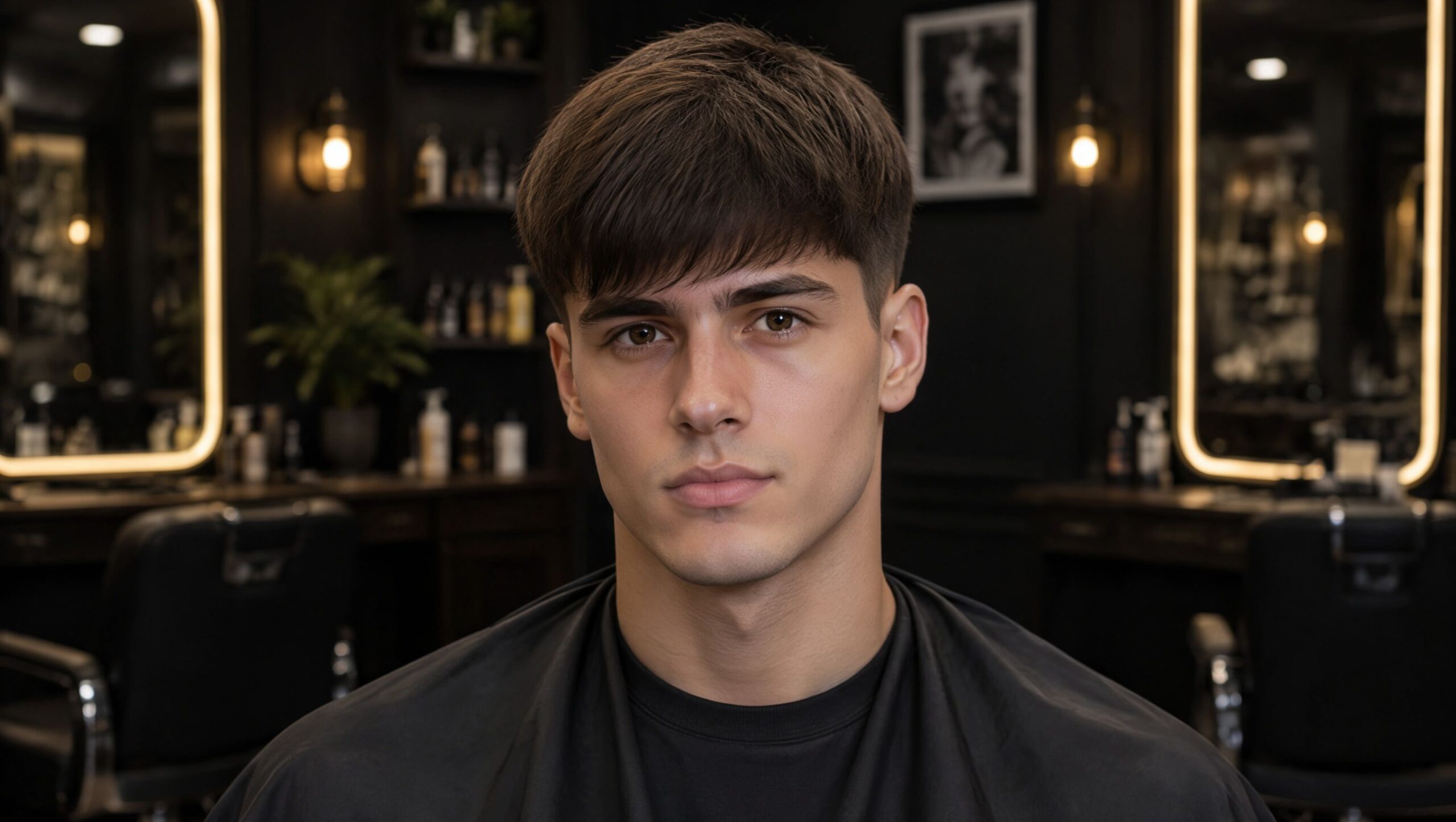
A low taper fringe is one of the most flexible modern men’s haircuts. It combines a clean taper around the ears and neckline with longer hair at the front. The fringe can be textured, messy, curly, straight, fluffy, short, or swept to one side.
The biggest advantage is balance. The taper keeps the haircut neat without taking too much weight from the sides. The fringe adds personality and can change how your forehead and face shape appear.
This guide covers 20 low taper fringe and crop styles, plus hair length, face shape, barber instructions, styling, products, maintenance, and common mistakes.
What is a low taper fade fringe?
A low taper fade fringe combines two main features: a low taper and a longer front fringe.
The taper starts low around the sideburns and neckline. It gradually blends shorter hair into the fuller hair above. Unlike a high fade, it does not remove large amounts of hair from the upper sides.
The fringe is the front section of the haircut. It usually falls forward toward the forehead. It can have a soft, textured finish or a sharper, more defined shape.
This makes the haircut highly adaptable. Straight hair can be point cut for movement. Wavy hair can use its natural texture. Curly hair can keep a longer front to allow the curls to form properly.
A low taper fringe is especially useful if you want a modern haircut without an extremely aggressive fade.
What it looks like from the front, side, and back
From the front, the fringe is the main feature. It can sit above the eyebrows, touch the eyebrows, or extend lower depending on the chosen style.
From the side, the taper should look gradual. The shortest area stays close to the ear. The upper side retains enough weight to connect naturally with the longer top.
From the back, the taper normally focuses around the neckline. The finish can be natural, squared, rounded, or slightly faded depending on your preference.
For the best result, think about all three angles before your haircut.
| View | What to look for |
| Front | Fringe length, texture, width, and direction |
| Side | Smooth taper and connection to the top |
| Back | Clean neckline and natural taper |
| Overall | Balanced top, sides, and facial proportions |
How it compares to similar cuts
Several hairstyles look similar because they all use shorter sides and longer hair at the front. The fringe shape and taper height create the biggest differences.
| Haircut | Fringe | Sides | Overall look |
| Low taper fringe | Flexible and textured | Low taper | Soft and versatile |
| French crop | Short and usually blunt | Taper or fade | Compact and neat |
| Textured crop | Choppy and short | Fade or taper | More rugged |
| Edgar | Very blunt | Strong fade | Sharp and defined |
| Caesar | Short forward fringe | Taper or fade | Classic and low maintenance |
| Mid taper fringe | Forward or swept | Higher taper | More contrast |
| High taper fringe | Usually prominent | High taper | Bold and dramatic |
A low taper fringe generally gives you more styling flexibility than a French crop. You can wear the fringe forward, messy, swept, or slightly lifted.
The French crop is usually more compact. The Edgar has a much stronger front edge. The low taper fringe is softer and easier to personalize.
Who does it suit?
The haircut works well for many men because the taper is subtle and the fringe can be customized.
It is particularly useful for:
- Straight hair
- Wavy hair
- Loose curls
- Medium to thick hair
- Some fine hair types
- Oval faces
- Square faces
- Longer face shapes
- Men who want a modern but wearable haircut
Hair texture matters more than simply copying a photo.
Thick hair may need weight removed from the top. Fine hair often looks better with a shorter fringe and light texture. Curly hair needs enough length to account for shrinkage.
A strong cowlick can also affect the result. If your front hair naturally grows upward or sideways, your barber should work with that direction rather than forcing it completely forward.
Best fringe for your face shape
There is no single fringe that works best for every face. The goal is to balance your natural proportions.
Oval face
An oval face is highly adaptable. You can usually wear short, medium, textured, or longer fringe styles.
Round face
Choose a textured or slightly longer fringe. Avoid making the front extremely heavy and flat, as it can make the face look wider.
Square face
A textured fringe works well because irregular edges can soften strong jaw and forehead proportions.
Long or rectangular face
A fuller fringe can visually shorten the face. Avoid excessive height on top if your goal is balance.
Heart face
A lighter side swept or textured fringe can help balance a wider forehead and narrower chin.
Diamond face
Try movement through the fringe. A soft, side swept finish can complement prominent cheekbones.
Face shape cheat sheet
| Face shape | Fringe recommendation |
| Oval | Almost any fringe |
| Round | Textured or slightly longer |
| Square | Choppy and textured |
| Long | Fuller forward fringe |
| Heart | Light or side swept |
| Diamond | Soft and movable |
20 best low taper fade fringe styles
The best style depends on your hair texture, density, face shape, and daily routine. These 20 options give you a practical starting point.
1. Textured low taper fringe
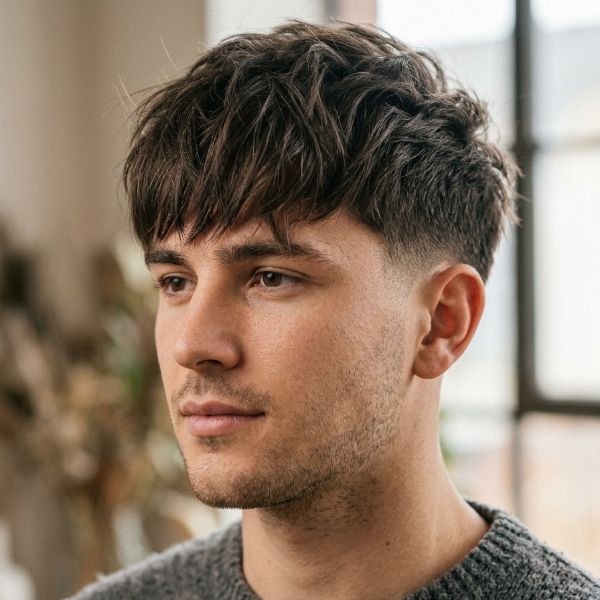
This is the most versatile option. The top is point cut into separated pieces that fall naturally forward.
Best for: Straight, wavy, and medium to thick hair.
Photo idea: Front three quarter view showing separated textured fringe and soft low taper.
2. Messy low taper fringe

The messy version looks relaxed rather than perfectly controlled. Use your fingers instead of a comb to create separation.
Best for: Thick and naturally textured hair.
Photo idea: Tousled fringe with visible texture and a natural neckline.
3. Short low taper fringe

The fringe sits relatively close to the hairline. It gives a cleaner appearance and requires less styling.
Best for: Fine, straight, or low maintenance hair.
Photo idea: Short textured fringe ending just above the eyebrows.
4. Long low taper fringe
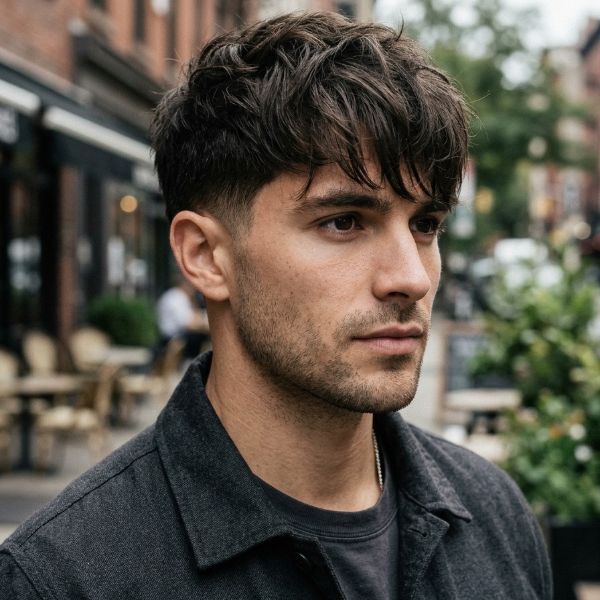
The longer fringe reaches toward or below the eyebrows. It creates more movement and forehead coverage.
Best for: Medium to thick hair.
Photo idea: Long forward fringe with soft taper around the ears.
5. Curly low taper fringe
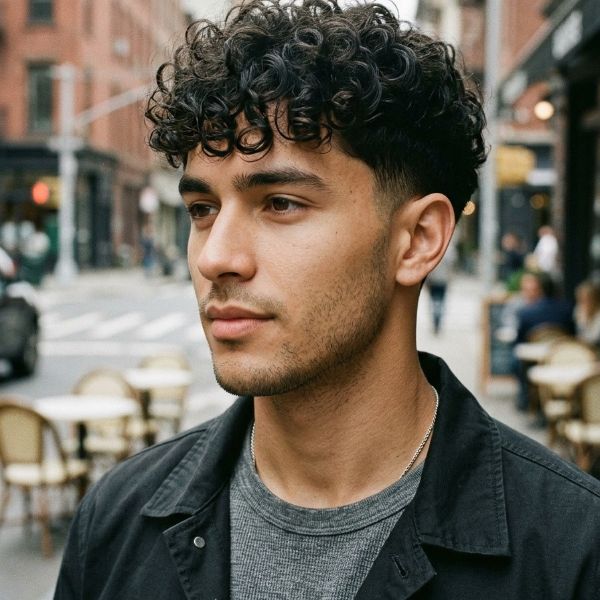
Natural curls remain the focus. The taper simply cleans the edges.
Best for: Curly hair.
Photo idea: Defined curls falling naturally over the forehead with a low taper.
6. Wavy low taper fringe
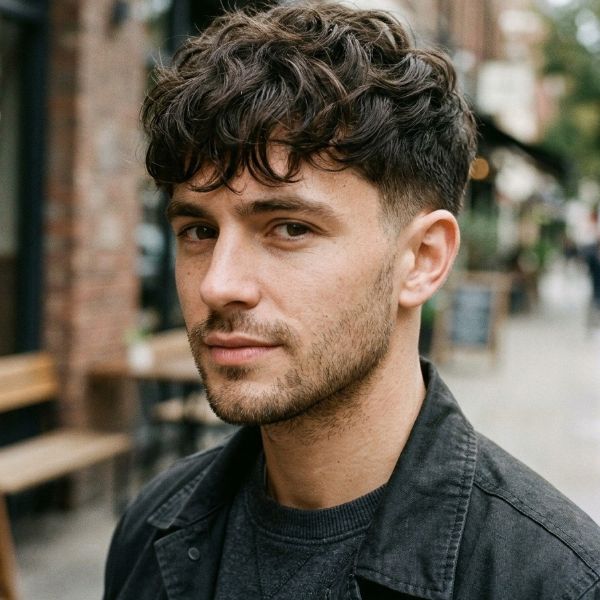
Wavy hair provides natural movement without requiring heavy styling.
Best for: Wavy hair.
Photo idea: Loose waves forming a natural forward fringe.
7. Straight hair textured fringe
Straight hair can sometimes look flat. Point cutting adds separation and prevents the front from becoming a solid block.
Best for: Straight, dense hair.
Photo idea: Piecey straight fringe with a soft taper.
8. Fluffy fringe
A fluffy fringe has more volume and softness. Blow-drying is usually helpful.
Best for: Thick or naturally full hair.
Photo idea: Rounded fluffy top with a low taper at the sides.
9. Side swept fringe
Instead of falling straight down, the fringe moves diagonally across the forehead.
Best for: Straight and wavy hair.
Photo idea: Side swept front with visible low taper around the temple.
10. Curtain fringe with low taper
The front is divided near the center and falls toward both sides.
Best for: Medium-length straight or wavy hair.
Photo idea: Soft curtain fringe with low tapered sideburns.
11. Low taper French crop
This version uses a shorter forward fringe. The result is compact and easy to maintain.
Best for: Men who prefer short styling.
Photo idea: Short straight fringe with a subtle low taper.
12. Low taper Edgar fringe
The front is much more defined and straight. This is a stronger interpretation of the fringe trend.
Best for: Thick straight hair and bold styles.
Photo idea: Crisp horizontal fringe with a clean low taper.
13. Caesar inspired fringe
The Caesar keeps the fringe short and forward. It is practical and requires little styling.
Best for: Short hair and busy routines.
Photo idea: Short forward fringe with tidy tapered edges.
14. Thick textured fringe
Extra density is controlled with strategic cutting. The goal is movement without making the front look bulky.
Best for: Thick and coarse hair.
Photo idea: Dense textured fringe with separated ends.
15. Fine hair low taper fringe
Fine hair can benefit from a shorter fringe. Too much length can make it appear flatter.
Best for: Fine or low density hair.
Photo idea: Short lifted textured fringe with lightweight styling.
16. Asian hair low taper fringe
Very straight, dense hair can create a strong block shape. Point cutting and careful weight removal can soften the result.
Best for: Thick straight hair.
Photo idea: Straight textured fringe with softly tapered temples.
17. Coily low taper fringe
Coily hair needs a shape that respects the natural curl pattern. The front can be shaped rather than forced into a straight fringe.
Best for: Coily and tightly textured hair.
Photo idea: Natural coily fringe with clean low tapered edges.
18. Low skin taper fringe
The taper can finish very close to the skin around the lowest areas while remaining low on the head.
Best for: Men who want more contrast.
Photo idea: Low skin taper around the ear with textured fringe above.
19. Natural low taper fringe
This is the understated version. The taper is soft and the fringe follows the natural direction of the hair.
Best for: Workplaces and low styling routines.
Photo idea: Natural forward fringe with subtle taper.
20. Low taper crop with textured top
This combines crop styling with the softer taper. The top remains short but has enough texture to avoid looking flat.
Best for: Men who want a practical everyday cut.
Photo idea: Compact textured crop with a clean low taper.
How long should your hair be?
The ideal length depends on the fringe you want.
| Style | Approximate top length |
| Short fringe | 1.5 to 2 inches |
| Textured fringe | 2 to 3 inches |
| Long fringe | 3 to 4 inches |
| Fluffy fringe | 3 to 4 inches |
| Curly fringe | Depends on curl shrinkage |
| Crop | About 1 to 2.5 inches |
These measurements are starting points, not strict rules. Your hair density and growth pattern can change the final result.
If you are unsure, leave the front slightly longer at first. Your barber can always remove more length. Growing it back takes much longer.
In the barber’s chair: what to ask for and what to expect
Do not simply say, “Give me a low taper fringe.”
That leaves too many details open.
Instead, tell your barber:
- Keep the taper low around the sideburns and neckline.
- Leave enough length on top for a forward fringe.
- Tell them whether you want short, medium, or long fringe.
- Ask for texture if you dislike a solid front.
- Explain whether you want a natural or sharp taper.
- Show front, side, and back reference photos.
A useful request is:
“I want a low taper around the ears and neckline. Keep the top longer and leave enough length in front for a textured fringe. I want natural movement rather than a blunt line.”
If your hair is thick, ask how much weight should be removed before requesting aggressive thinning. Too much thinning can make the fringe difficult to control.
How to style it at home
A low taper fringe can be styled in a few minutes.
For a textured finish
- Start with slightly damp hair.
- Apply a small amount of sea salt spray or styling cream.
- Blow-dry the fringe forward.
- Use your fingers to separate the ends.
- Finish with a small amount of matte clay or paste.
For a messy finish
Let the hair become mostly dry naturally. Then use your fingers to push the fringe forward and slightly apart.
For a neat finish
Use a comb while blow-drying. Direct the fringe into the shape you want. Finish with a lightweight product.
Do not overload the front with product. Too much product can make the fringe look greasy and flat.
Best products
The right product depends on your hair.
| Hair type | Good product category | Finish |
| Fine | Texture powder | Light and matte |
| Straight | Matte paste | Natural separation |
| Thick | Matte clay | Stronger control |
| Wavy | Sea salt spray | Natural texture |
| Curly | Curl cream | Definition |
| Coily | Lightweight curl product | Moisture and shape |
For most textured fringes, matte products are easier to control than high shine pomades.
Maintenance and upkeep
A low taper fringe looks best when both the taper and fringe are maintained.
Most people will need a cleanup roughly every 2 to 4 weeks, depending on how quickly their hair grows and how sharp they want the taper to remain.
The fringe may need attention sooner. If it starts entering your eyes or losing its intended shape, ask your barber for a small front trim rather than cutting the entire haircut shorter.
Between appointments:
- Keep the neckline clean.
- Wash according to your hair type.
- Avoid excessive heat.
- Use lightweight styling products.
- Do not repeatedly cut the fringe yourself.
- Brush or style the hair in its natural direction.
Common mistakes to avoid
The biggest mistake is choosing a reference photo without considering your own hair.
Other common problems include:
- Asking for a taper that is too high.
- Making the fringe too blunt unintentionally.
- Cutting curly hair too short when dry.
- Using too much styling product.
- Removing too much weight from thick hair.
- Ignoring a strong cowlick.
- Copying a style that requires more maintenance than your routine allows.
- Showing only a front photo to the barber.
- Waiting too long between taper cleanups.
A good haircut should work with your hair, not fight it.
Pros and cons
What works
- Modern appearance
- Works with many hair textures
- Low taper is less aggressive than a high fade
- Fringe can change facial proportions
- Many styling options
- Easy to adapt for casual or professional settings
- Can work with straight, wavy, curly, and coily hair
- Grows out relatively naturally when the taper is kept soft
What to consider
- Longer fringe needs more styling
- Thick hair may require weight control
- Fine hair can become flat with too much length
- Cowlicks may affect the fringe direction
- A sharp taper requires regular maintenance
- Curly hair can shrink significantly after cutting
- The wrong fringe shape can make some faces look wider or longer
How much does it cost?
The price depends on the barber, location, shop level, and whether you request additional styling or beard work.
A basic low taper fringe is usually priced similarly to other fade or taper haircuts. Premium barbershops and major U.S. cities may charge considerably more than neighborhood shops.
Before booking, ask whether the quoted price includes the taper, scissor work on top, styling, and neckline cleanup.
Frequently asked questions
What is a low taper fringe haircut?
It is a haircut that combines a low taper around the ears and neckline with longer hair at the front that forms a fringe.
Is a low taper fringe good for straight hair?
Yes. Straight hair works especially well with textured, short, side swept, and messy fringe variations.
How long should a low taper fringe be?
Around 1.5 to 3 inches is a useful starting range, while longer styles can require 3 to 4 inches or more.
Does a low taper fringe suit a round face?
Yes. A textured or slightly longer fringe can work well, especially when the front avoids becoming overly flat and heavy.
How often should I get a low taper fringe trimmed?
A cleanup every 2 to 4 weeks is common, depending on how quickly your hair grows and how sharp you want the taper.
Is a low taper fringe easy to style?
Yes. Short and natural versions can take only a few minutes, while longer or fluffy versions usually require more styling.
What should I tell my barber for a low taper fringe?
Ask for a low taper around the ears and neckline, leave enough top length for your chosen fringe, and specify whether you want the front textured, blunt, messy, curly, or side swept.
Is the low taper fade fringe right for you?
The low taper fade fringe is a strong choice if you want a haircut that feels modern without being overly aggressive. The taper keeps the edges clean while the fringe gives you room to express your personal style.
The best version is not necessarily the most dramatic one. Choose the fringe according to your hair texture, density, face shape, and daily routine. A shorter textured fringe can be practical for busy mornings. A longer or fluffy fringe gives you more styling possibilities.
If you are visiting a barber for the first time, bring several photos that show the front, side, and back. Tell the barber how you normally style your hair. Most importantly, agree on the fringe length before cutting.
A well-executed low taper fringe should look intentional from every angle. It should also remain manageable after the first few weeks of growth. That balance is what makes this haircut such a versatile choice for 2026.
Final Thoughts
A low taper fringe gives you the best of two worlds: clean edges and expressive texture. The low taper keeps the haircut controlled without removing too much side volume, while the fringe can be customized for different faces and hair types.
Start with the right length, communicate clearly with your barber, and use lightweight styling products. Whether you prefer a short crop, messy texture, curly fringe, side sweep, or longer front, there is a low taper fringe variation that can fit your look.
SEO Meta Description: Discover 20 low taper fringe styles, face shape tips, hair lengths, barber advice, styling steps, products, maintenance, and expert haircut guidance.