

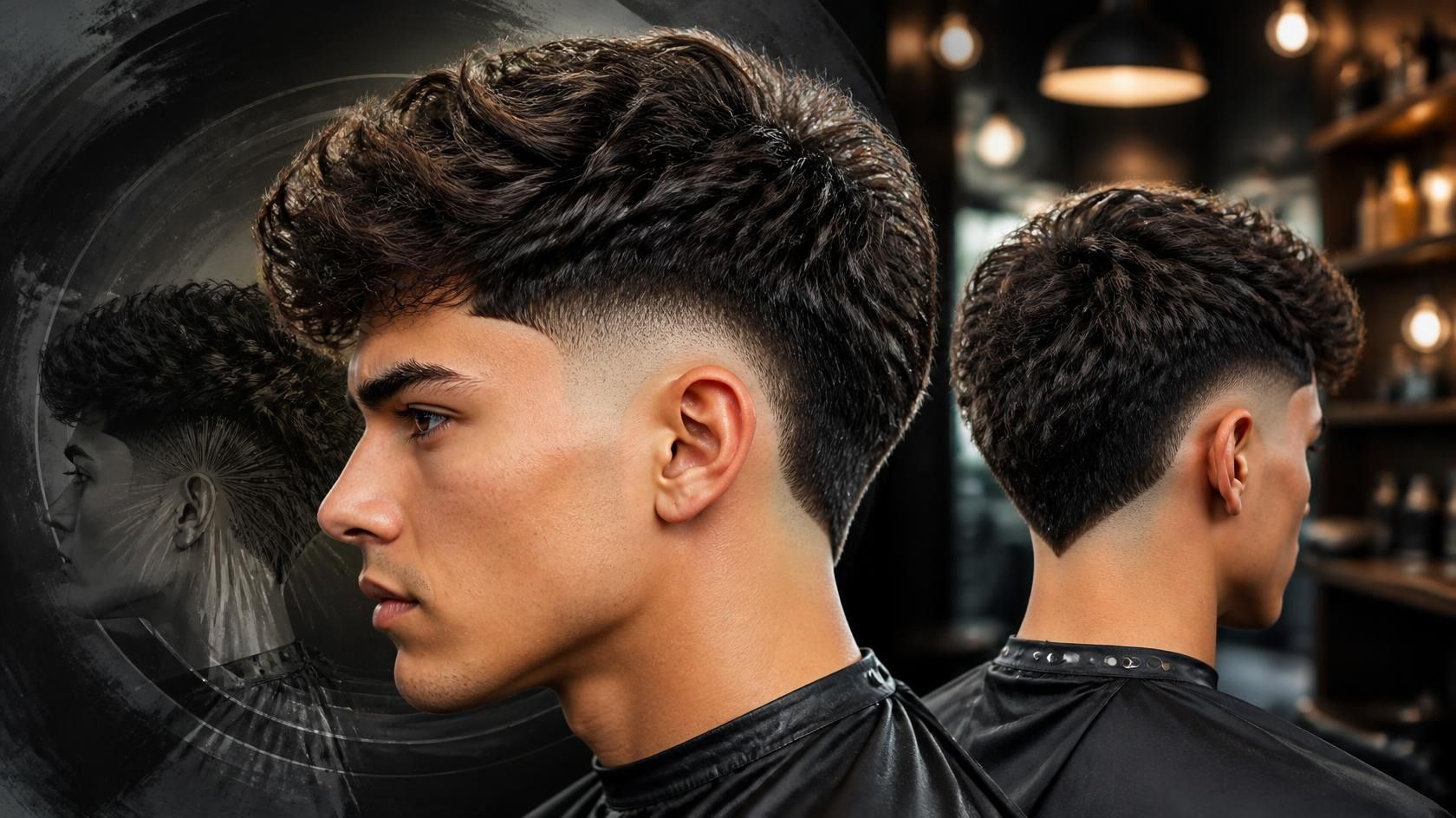
A burst fade haircut is one of the most versatile modern fades for men. Its signature feature is the curved fade that wraps around the ear instead of running straight across the sides. The result is a clean, defined look that can be combined with short crops, curls, mullets, mohawks, quiffs, and longer hairstyles.
The best burst fade is not simply about choosing a high, low, or mid fade. Your hair type, face shape, desired top length, neckline, and personal style all affect the final result.
Below are 32 of the best burst fade haircuts for men, followed by practical advice on choosing, styling, and maintaining the cut.
What Is a Burst Fade Haircut?
A burst fade is a men’s fade haircut that curves around the ear in a semicircular or rounded shape. The hair becomes shortest around the ear, then gradually gets longer as the fade moves upward and toward the back.
Unlike a traditional fade that can continue evenly around the head, a burst fade concentrates the faded section around the ear. This allows more hair to remain at the back and makes the cut especially useful with mullets, mohawks, faux hawks, and textured styles.
The burst can finish as a skin fade, zero fade, or softer shadow fade. The height can also be low, mid, or high. These choices change how bold the haircut looks.
What Are the Best Burst Fade Haircut Styles?
1. Classic Burst Fade
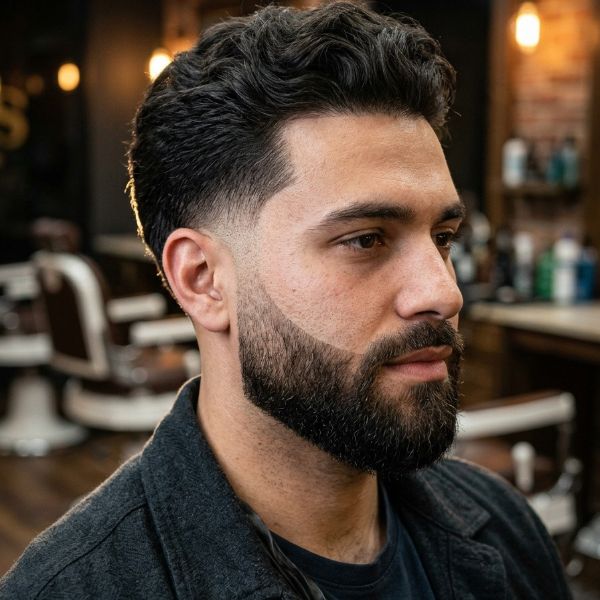
The classic burst fade keeps the signature semicircle around the ear with a balanced amount of length on top. It is a versatile choice for men who want a modern fade without committing to an extreme style.
2. Low Burst Fade
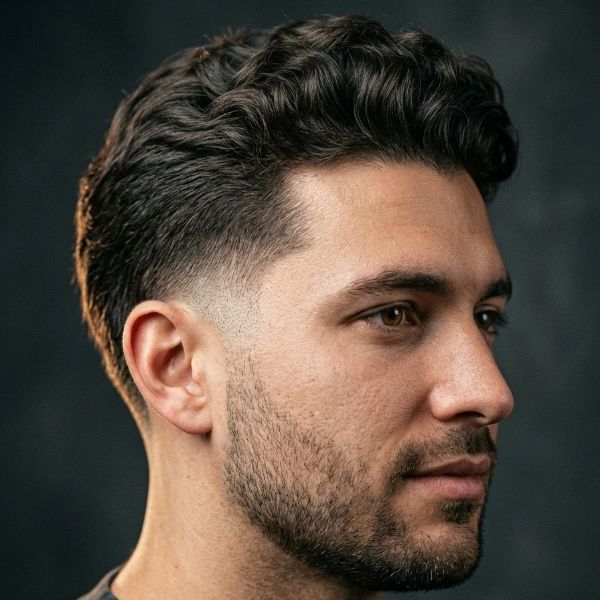
A low burst fade starts close to the ear and leaves more weight around the upper sides. It is subtle, professional, and easier to grow out than a higher burst.
3. Mid Burst Fade
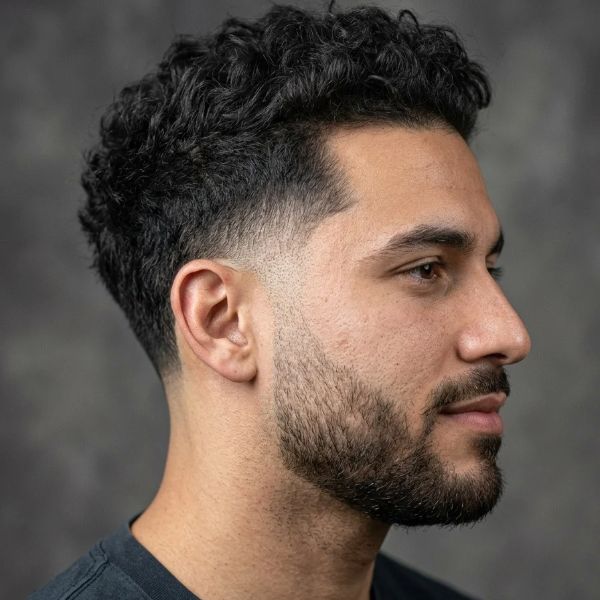
A mid burst fade creates more contrast by taking the fade higher around the ear. It offers a strong balance between a low burst and a dramatic high burst.
4. High Burst Fade
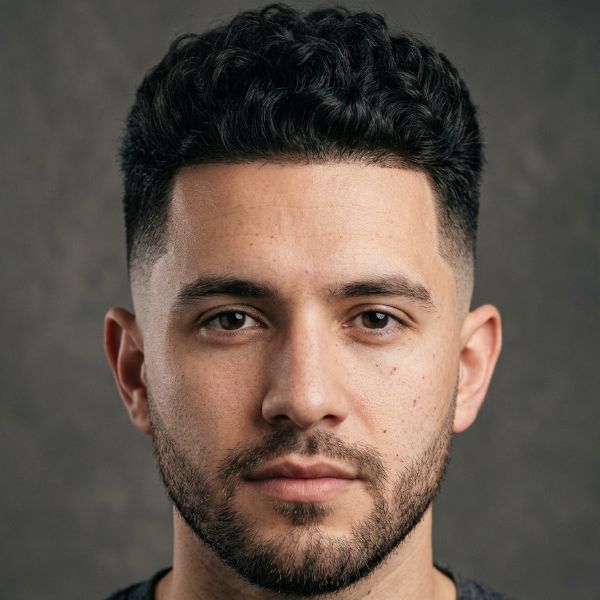
The high burst fade removes more hair around the sides and creates a sharper visual contrast. It works particularly well with thick, textured, curly, or high-volume hair.
5. Burst Fade Mullet
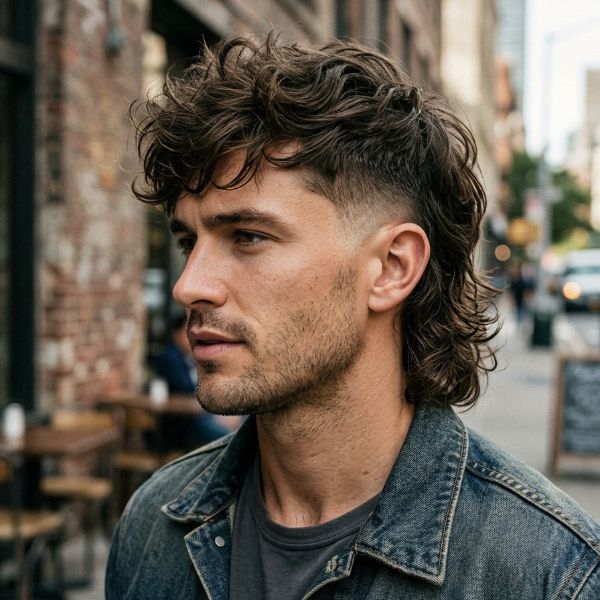
The burst fade mullet is one of the most recognizable combinations. The sides are tightly faded around the ears while the back remains longer, creating a bold front-to-back silhouette.
6. Burst Fade Mohawk
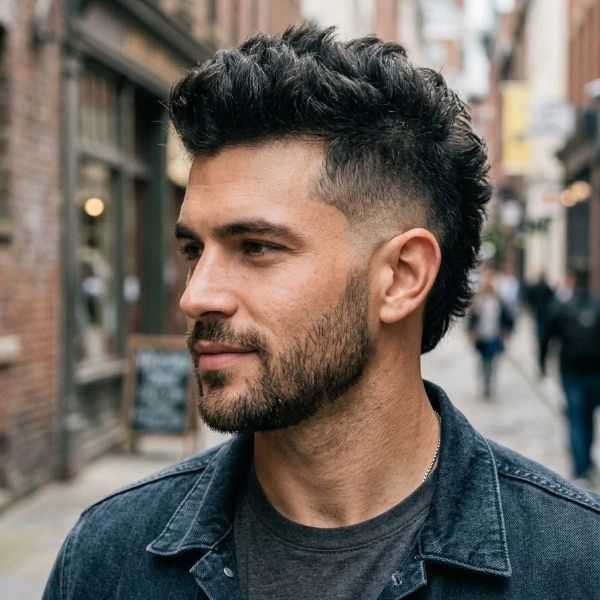
A burst fade mohawk leaves a prominent strip of hair through the center while the sides curve tightly around the ears. Style the central section upward for maximum height and definition.
7. Burst Fade Faux Hawk
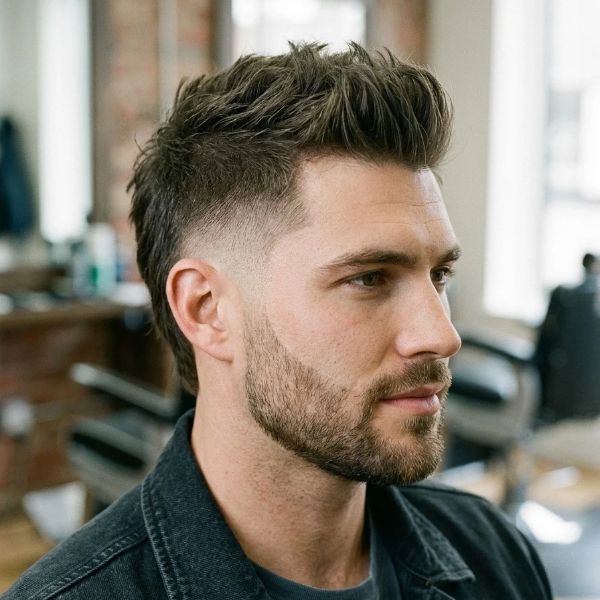
The faux hawk gives you the attitude of a mohawk without requiring an extremely narrow central strip. A burst fade adds clean contrast around the ears while keeping the top more wearable.
8. Burst Fade Textured Crop
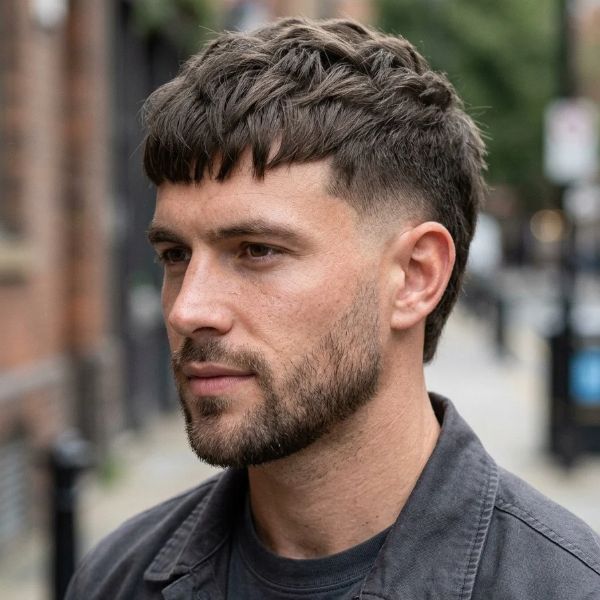
Pairing a burst fade with a textured crop creates a short, low-maintenance hairstyle. Use point-cut texture and a matte styling product to create separation without making the hair look greasy.
9. Burst Fade French Crop
A French crop with a burst fade combines a short forward fringe with textured hair on top. The curved sides give the otherwise compact haircut a more distinctive profile.
10. Burst Fade Pompadour
A pompadour needs length and volume through the front. The burst fade removes weight around the ears while leaving enough hair above to create a fuller, classic-inspired shape.
11. Burst Fade Quiff
The burst fade quiff is ideal when you want height without the formal appearance of a pompadour. Blow-dry the front upward and slightly backward before applying a lightweight matte product.
12. Burst Fade V-Cut
A burst fade with a V-cut neckline creates a sharp rear profile. The pointed neckline adds definition while the curved ear fade keeps the sides clean.
13. Burst Fade Comb Over
The comb over adds a polished finish to the burst fade. Keep the top long enough to part naturally and use a light styling cream for control and movement.
14. Burst Fade Slick Back
A slick back gives the burst fade a more refined appearance. It works best when you have enough top length to brush the hair backward without forcing it into place.
15. Burst Fade Buzz Cut
A buzz cut with a burst fade is short, masculine, and easy to maintain. The curved fade adds detail to an otherwise simple haircut.
16. Burst Fade Crew Cut
The crew cut keeps the top short while the burst fade creates contrast around the ears. It is a practical option for men who prefer simple daily styling.
17. Burst Fade Side Part
A side part adds structure to the top while the burst fade provides a modern edge around the ears. This combination works well for both casual and professional settings.
18. Burst Fade Hard Part
A hard part creates a clearly shaved line separating the top from the faded side. Combined with a burst fade, it produces a sharper, more defined appearance.
19. Burst Fade with Beard
A beard can extend the visual weight of the haircut downward and create a stronger frame around the face. Ask your barber to blend the sideburn area naturally into the beard.
20. Burst Fade with Design
Add a simple line, curve, or geometric pattern inside the faded section for extra personality. Keep the design clean because overcrowding the area can make the haircut look messy.
21. Burst Fade Long Hair
Longer hair on top creates dramatic contrast against the shorter ear area. This version works particularly well with textured, swept-back, or layered long hair.
22. Burst Fade Curly Hair
Curly hair and burst fades are a natural combination because the fade removes bulk around the ears while preserving the curls above. Keep enough length to allow your curl pattern to form properly.
23. Burst Fade Wavy Hair
Wavy hair adds natural movement to a burst fade. A medium-length top with sea salt spray or lightweight texture cream can emphasize the waves without flattening them.
24. Burst Fade Straight Hair
Straight hair makes the shape of the burst fade especially visible. Add texture with a matte clay, or keep the top smooth for a cleaner and more controlled appearance.
25. Burst Fade Afro
A burst fade can sharpen the perimeter of an afro while preserving its natural volume. The curved area around the ear creates definition without taking away the character of the top.
26. Burst Fade Dreadlocks
Dreadlocks paired with a burst fade create strong contrast between the clean ear area and longer textured hair. Keep the fade carefully shaped so it complements the direction and volume of the locks.
27. Burst Fade Brush Up
The brush-up pushes the top upward to create height and texture. It is a simple way to make a burst fade look fuller without requiring extremely long hair.
28. Burst Fade Taper
A burst fade taper uses a softer transition around the ear and neckline. It is a good option if you want the burst shape but prefer less dramatic skin exposure.
29. Burst Fade Ivy League
An Ivy League top gives the burst fade a sophisticated and controlled appearance. Keep the top long enough to create a neat side sweep while maintaining the clean curved fade.
30. Burst Fade Side Swept Fringe
A side-swept fringe adds movement across the forehead while the burst fade keeps the sides defined. It can also soften the appearance of angular facial features.
31. Burst Fade Modern Mullet
The modern mullet combines a cleaner top and sides with controlled length through the back. The burst fade naturally supports this shape by removing bulk around the ears while preserving the rear length.
32. Burst Fade High Top
A high top creates strong vertical volume above the burst fade. This style works particularly well with dense or coily hair and can be shaped for either a classic or contemporary finish.
Who Does a Burst Fade Suit?
A burst fade can work for many men because the fade itself is highly adjustable. Your barber can change its height, width, contrast, and finish based on your features.
By Face Shape
Oval: Almost every burst fade variation can work because an oval face is naturally balanced.
Round: Add height through the top and avoid excessive width at the sides to create a longer visual shape.
Square: A textured crop, quiff, or short top can complement strong jawlines without making the face appear overly boxy.
Oblong: Keep some side volume and avoid making the top excessively tall.
Heart: Medium-length texture and a softer burst can help balance a wider forehead with a narrower chin.
By Hair Type
Straight hair: Great for crops, quiffs, slick backs, side parts, and clean short styles.
Wavy hair: Excellent for textured crops, side-swept styles, and loose quiffs.
Curly hair: Particularly effective with curly tops, curly mullets, and natural volume.
Coily hair: Works well with afros, high tops, short textured styles, and defined natural shapes.
Thick hair: The burst fade can remove unwanted bulk around the ears while preserving volume on top.
Fine hair: Keep the fade softer and use texture and controlled volume on top rather than creating an overly high contrast.
Burst Fade vs Drop Fade: What Is the Difference?
The main difference is where the fade travels.
A burst fade concentrates the fade around the ear in a semicircle. More length is intentionally preserved toward the back.
A drop fade follows the shape of the head and continues farther around the back, creating a curved fade across the rear perimeter.
| Feature | Burst Fade | Drop Fade |
| Main fade area | Around the ear | Around the sides and back |
| Shape | Semicircular ear arc | Curved band following the head |
| Back length | Usually preserved | Usually reduced |
| Best known pairings | Mullet, mohawk, curls | Quiff, crop, comb over |
| Visual effect | Localized and bold | Rounded and continuous |
If you specifically want longer hair behind the ears, tell your barber that you want a burst fade rather than a drop fade.
How Do You Choose the Right Burst Fade?
Start with the overall hairstyle you want, then choose the fade height.
Consider these factors:
- Decide the top style. Choose a crop, quiff, curls, mullet, mohawk, or another shape first.
- Choose the fade height. Low is subtle, mid is balanced, and high is more dramatic.
- Choose the finish. A skin fade creates maximum contrast, while a shadow fade looks softer.
- Consider your hair density. Thick hair can handle stronger contrast, while fine hair may benefit from a softer transition.
- Think about maintenance. A tight skin burst needs more frequent cleanup than a softer taper.
- Bring reference photos. A side and rear photo can communicate the shape better than words alone.
What Should You Tell Your Barber?
Do not simply say, “Give me a burst fade.” Describe the entire haircut.
You can say:
“I want a burst fade that curves around the ear. Keep the back longer, make the burst low, mid, or high, and blend it into my top without taking away too much length. I want a [crop, quiff, curls, mullet, or other style] on top.”
Also tell your barber:
- How short you want the fade
- How much length you want on top
- Whether you want the back connected or longer
- Whether you want a natural or sharp neckline
- Whether you prefer a matte or shiny finish
- Whether you want a beard blend
Photos are especially useful because fade height and ear-arc shape can look different from one barber to another.
How to Style a Burst Fade for Maximum Volume
A good burst fade does not require complicated styling. The main work happens on top.
Start with slightly damp hair and apply a lightweight pre-styler or sea salt spray. Blow-dry the hair in the direction you want it to sit. For a quiff or brush-up, direct the airflow upward from the roots.
Once the hair is dry, apply a small amount of matte clay, paste, or styling cream. Start with less product and add more only if necessary.
For maximum volume:
- Start with damp, not soaking-wet hair.
- Apply a lightweight volumizing product.
- Blow-dry from the roots.
- Lift the front with your fingers or a brush.
- Finish with a small amount of matte product.
- Avoid heavy wax if your hair becomes flat easily.
Curly hair usually needs a different approach. Use a curl cream or lightweight leave-in product and let the natural pattern form rather than brushing the curls aggressively.
How Often Should You Get a Burst Fade?
Most men can refresh a burst fade every 2 to 3 weeks to keep the curved shape crisp. A softer version may last longer, while a very short skin burst can look noticeably grown out sooner. Current style guides commonly recommend roughly this maintenance window.
If you want the haircut to remain extremely sharp, schedule regular edge and fade cleanups. If you prefer a more natural appearance, you can extend the time between appointments.
Your hair growth rate also matters. Fast-growing hair may need attention sooner than hair that grows slowly.
What Is the Biggest Mistake Men Make with a Burst Fade?
The biggest mistake is asking for a burst fade without explaining how much hair should remain around the back and how high the arc should sit.
A burst fade is defined by its placement and curved shape, not simply by a particular clipper guard.
Another common mistake is choosing an extremely high or tight fade when the top does not have enough density or length to balance it. Your barber should adjust the fade to your hair growth, head shape, and desired silhouette.
FAQ
Is a burst fade the same as a mullet?
No. A burst fade is the fade technique around the ear, while a mullet is a hairstyle with shorter front and sides and longer hair at the back.
How long does a burst fade last?
A burst fade generally looks sharp for about 2 to 3 weeks, although growth speed and fade length can change the ideal maintenance schedule.
Can curly hair get a burst fade?
Yes. Curly hair is one of the strongest pairings because the fade removes bulk around the ears while preserving natural curl volume on top.
What hairstyles pair best with a burst fade?
Popular pairings include mullets, mohawks, faux hawks, textured crops, curly tops, quiffs, afros, high tops, and longer textured styles.
How do I ask my barber for a burst fade?
Ask for a semicircular fade around the ear, specify low, mid, or high placement, explain how short you want it, and clearly state how much length you want to keep at the back.
Final Thoughts
The burst fade haircut stands out because it gives you a defined shape without forcing the entire head into one fade pattern. The curved section around the ear creates the signature look, while the top and back can be customized to suit your personality, hair type, and face shape.
For a subtle everyday haircut, choose a low burst with a short crop or crew cut. For stronger contrast, try a high burst with curls, a quiff, high top, or textured style. If you want something more adventurous, the burst fade mullet, mohawk, or modern mullet delivers a much bolder silhouette.
The best result comes from treating the burst fade as part of the complete haircut rather than as a standalone fade. Choose the top length, fade height, neckline, and level of contrast together, then show your barber clear reference photos from the side and back.