

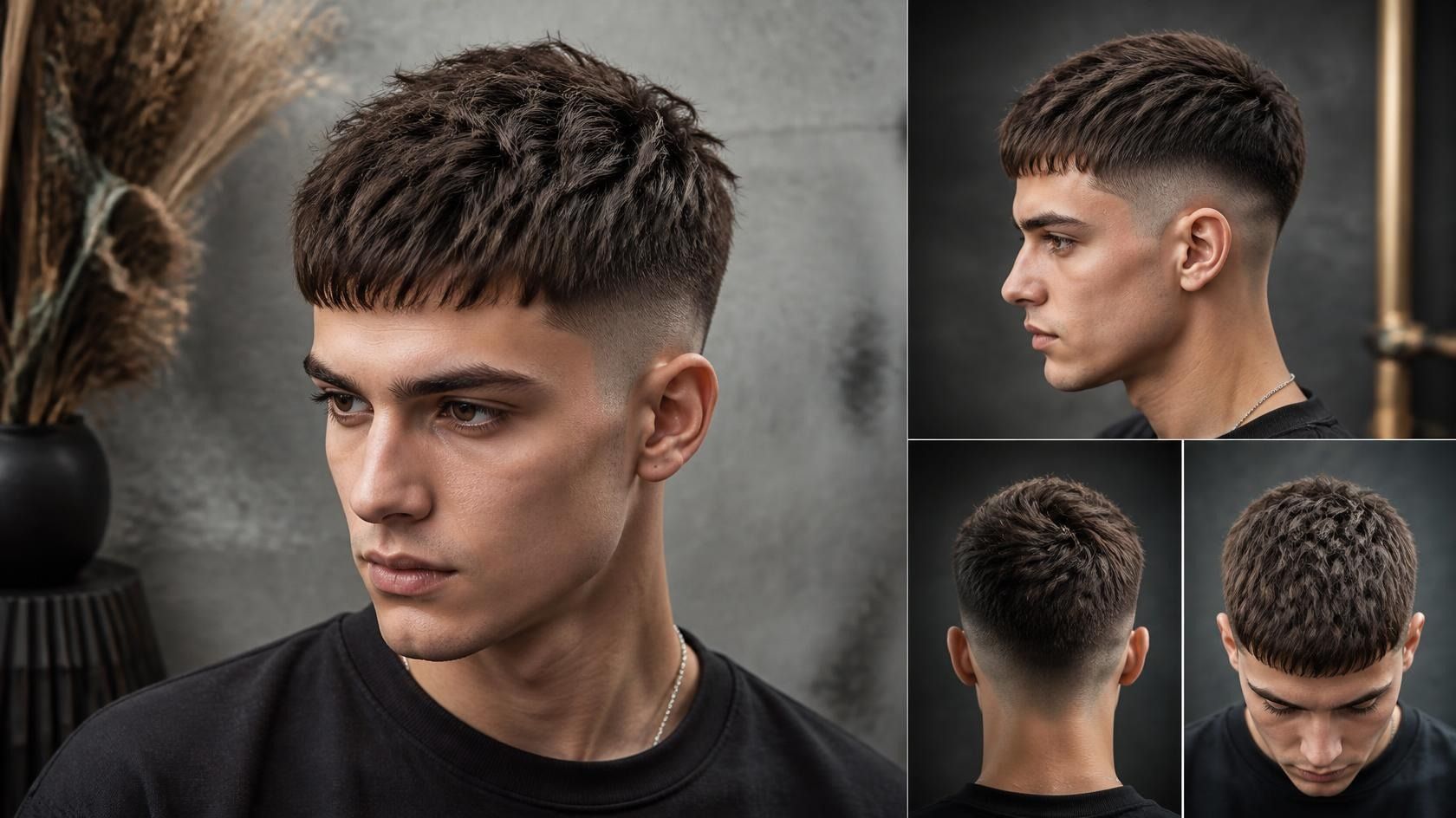
The Caesar haircut remains one of the easiest short hairstyles for men to wear in 2026. Its signature feature is a short, forward-combed fringe that sits horizontally across the forehead. Modern versions add low fades, mid fades, skin fades, tapers, texture, curls, and even beards.
What makes the Caesar different is its balance of structure and simplicity. You do not need long hair or complicated styling. The right fringe length and side treatment can also make the haircut work for different face shapes, hair textures, and hairlines.
Below are 20 Caesar haircut styles worth considering, followed by practical advice on choosing, styling, maintaining, and explaining the cut to your barber.
What Is a Caesar Haircut?
A Caesar haircut is a short men’s hairstyle with a forward-styled top and a distinctive horizontal fringe across the forehead. Traditionally, the hair on top is kept relatively uniform and short, while the sides and back are trimmed close. Modern Caesar cuts often use a taper or fade for a cleaner contrast.
The top is commonly around 1 to 2 inches, although the exact length depends on hair density, texture, face shape, and the desired finish. The fringe is the most important detail. Without that forward horizontal front, the haircut can start looking more like a crew cut or another cropped style.
The Caesar is also highly adaptable. Straight hair can create a clean, traditional finish. Thick hair can benefit from texture. Curly and coily hair can produce a more natural, dimensional version.
20 Best Caesar Haircut Styles for Men
1. Classic Caesar Cut

The classic Caesar keeps the top short and relatively even, with a clean horizontal fringe. The sides are usually scissor-cut or lightly tapered.
It is the best starting point if you want the traditional Caesar without an aggressive fade.
2. Modern Caesar with Low Fade
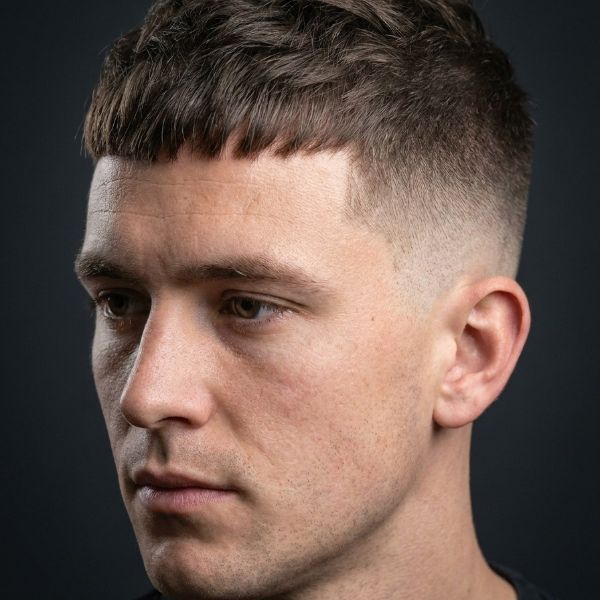
A low fade keeps the sides gradually shorter near the ears and neckline while preserving more weight around the temples.
This version feels contemporary without becoming overly dramatic. It is a strong choice for work and casual settings.
3. Textured Caesar Cut

The textured Caesar adds separation through the top instead of keeping every strand perfectly uniform.
A small amount of matte clay or paste can emphasize the texture. This is particularly useful for thick hair because it removes some visual bulk.
4. Short Caesar Cut

The short Caesar uses a very compact top and an equally concise fringe.
It is ideal for men who want minimal styling. A short Caesar also grows out relatively predictably because there is less length to manage.
5. Long Caesar Cut

A long Caesar leaves extra length on top while maintaining the recognizable forward fringe.
The additional length gives your barber more room to create texture and movement. It can be a good transition for someone who does not want an extremely short haircut.
6. Caesar Mid Fade

The mid fade begins around the middle of the sides, creating a noticeable transition between the short sides and Caesar top.
It offers more contrast than a low fade while remaining less dramatic than a high fade.
7. Caesar High Fade

The high fade removes much more weight from the upper sides.
This makes the short top and fringe stand out immediately. It works particularly well when you want a sharper, more modern appearance.
8. Caesar Skin Fade

A skin fade takes the sides down to the skin before gradually blending upward.
The contrast can make a simple Caesar look much more striking. Because the fade is extremely short, expect to maintain it more frequently.
9. Caesar Taper
A Caesar taper is softer than a traditional skin or high fade.
The barber gradually shortens the hair around the sideburns and neckline while leaving more natural weight on the sides. It is one of the safest options for a professional environment.
10. Caesar Drop Fade
A drop fade curves downward behind the ear instead of following a straight horizontal path.
This creates a distinctive silhouette while keeping the Caesar fringe as the focal point. It works especially well when viewed from the side and back.
11. Caesar Buzz Cut
The Caesar buzz cut combines an extremely short top with a tiny forward fringe.
It is a practical choice for men who want the visual identity of a Caesar without much daily maintenance. Ask your barber to preserve enough front length to make the fringe recognizable.
12. Messy Caesar Cut
The messy Caesar deliberately breaks up the uniform appearance of the traditional style.
Finger styling and matte products can create separation without making the haircut look overly polished. It is a good option for a relaxed, modern aesthetic.
13. Curly Caesar Cut
A curly Caesar lets the natural curl pattern define the top and fringe.
Instead of forcing the hair completely flat, your barber can work with its natural shape. The sides can be tapered or faded to make the curls stand out.
14. Wavy Caesar Cut
Wavy hair gives the Caesar a softer and more natural finish.
The forward fringe remains important, but the waves create movement across the top. Avoid excessive product because it can flatten the natural texture.
15. Caesar for Receding Hairline
The Caesar can be useful for a receding hairline because the forward fringe brings some attention over the forehead rather than exposing the entire hairline.
However, it should not be treated as a cure for hair loss. The best result comes from choosing a fringe length that looks intentional rather than trying to hide every area of recession. Current barber guides also identify the forward fringe as one reason the Caesar can suit higher foreheads and receding hairlines.
16. Caesar Undercut
The Caesar undercut creates a stronger separation between the longer top and much shorter sides.
Unlike a gradual fade, the transition can be more obvious. Choose it if you want a bold, fashion-forward haircut rather than a subtle classic.
17. Caesar Mullet
The Caesar mullet combines the short forward fringe and cropped top with extra length toward the back.
It is a more experimental version of the haircut. The contrast works best when the barber carefully controls the transition between the cropped front and longer rear.
18. Dark Caesar (Black Men)
For Black men, the Caesar can be adapted to work with coily, kinky, or wave-textured hair.
A clean line-up, low taper, waves, or a subtle fade can complement the short forward top. The barber should account for shrinkage and natural texture when setting the fringe.
19. Caesar with Beard
A Caesar paired with a beard creates a strong connection between the haircut and facial hair.
A low taper or fade can help blend the sideburn area into the beard. Keep the beard shape consistent with the haircut for a cleaner overall silhouette.
20. Layered Caesar Cut
A layered Caesar adds controlled variation to the top instead of maintaining one completely uniform surface.
This can make dense hair easier to manage and give straight or slightly wavy hair more movement. Keep the fringe defined so the cut still reads as a Caesar.
How Do You Choose the Right Caesar Cut for Your Face Shape?
Your face shape can influence the ideal fringe length, fade height, and amount of volume.
| Face Shape | Caesar Approach |
| Oval | Most Caesar variations work well |
| Round | Try a textured top and moderate fade |
| Square | Classic, taper, or low fade works well |
| Oblong | Avoid excessive height; use a fuller top |
| Heart | A textured Caesar can balance the forehead |
| Diamond | Try moderate sides with controlled top texture |
The key is proportion. A high fade can visually lengthen the upper face, while a heavier fringe can reduce the appearance of forehead height.
By Hair Type
Straight hair: Best for a clean, traditional Caesar and sharp horizontal fringe.
Wavy hair: Works well with textured or messy Caesars that preserve natural movement.
Curly hair: A modified curly Caesar can look excellent when the barber follows the curl pattern instead of forcing the hair flat.
Thick hair: Texture and layering can reduce unwanted bulk.
Fine hair: A shorter, controlled Caesar can make sparse areas look more deliberate, while matte products can add visual texture.
Coily hair: Work with the natural curl pattern and consider a taper, line-up, or wave-focused finish.
Caesar vs French Crop vs Crew Cut: What’s the Real Difference?
These three styles can look similar, but their structure is different.
| Haircut | Main Feature | Top | Fringe |
| Caesar | Forward horizontal fringe | Short and relatively uniform | Short and defined |
| French Crop | Texture and contrast | Usually more textured | Often longer or more broken |
| Crew Cut | Graduated top | Short with changing length | No defining horizontal fringe |
If you want a clean, controlled front, choose the Caesar. If you want more texture and movement, consider a French crop. If you prefer a classic short haircut without a fringe, the crew cut may be better.
What Should You Tell Your Barber for a Caesar Cut?
Do not simply say, “Give me a Caesar.” Show your barber a reference photo and explain these five details:
- Top length: Tell them approximately how much length you want.
- Fringe: Explain whether you want it blunt, soft, textured, or slightly broken.
- Sides: Choose a taper, low fade, mid fade, high fade, or skin fade.
- Texture: Tell them whether you want a smooth or textured finish.
- Hairline: Mention whether you want the natural hairline preserved or sharpened.
A useful request is: “Keep the top short and forward, make the fringe horizontal, and use a low taper on the sides. Add light texture without making the fringe too choppy.”
How Do You Style a Caesar Haircut at Home?
The Caesar is designed to be relatively easy to style.
- Start with towel-dried hair.
- Apply a small amount of matte paste or clay.
- Push the hair forward with your fingers or a comb.
- Shape the fringe horizontally across the forehead.
- Use your fingers to separate the top if you want texture.
- Finish with a light hairspray if your hair loses its shape quickly.
Avoid using too much product. Heavy pomade can make a short Caesar look greasy and flatten the texture.
How Often Should You Trim a Caesar Cut?
Most men should consider a Caesar trim every 3 to 5 weeks.
A low taper or fade may need earlier maintenance if you want the sides to remain extremely clean. The fringe is another important checkpoint because even a small amount of growth can noticeably change its position.
If you prefer a softer, grown-out appearance, you can stretch appointments to around 5 or 6 weeks.
How Much Does a Caesar Haircut Cost?
The price depends heavily on the barber, location, shop level, and whether you choose a simple cut or a detailed fade.
| Service | Typical Relative Cost |
| Basic Caesar | Lower |
| Caesar with taper | Moderate |
| Caesar with fade | Moderate |
| Caesar with skin fade and line-up | Higher |
| Premium barbershop Caesar | Higher |
In the United States, a basic haircut may be considerably cheaper than a detailed fade at a premium barbershop. Always check the barber’s current menu before booking because local pricing varies.
What Are the Best Products for a Caesar Cut?
The best product depends on the finish you want.
- Matte clay: Strong texture and a natural-looking finish.
- Matte paste: Flexible control without excessive shine.
- Styling cream: Better for softer, natural-looking Caesars.
- Sea salt spray: Useful for adding texture to longer or wavy tops.
- Light hairspray: Helps hold the fringe in place.
For most modern Caesars, start with a small amount of matte product. Add more only if necessary.
Frequently Asked Questions
Is a Caesar Haircut Professional Enough for the Office?
Yes. A classic Caesar with a taper or low fade can look clean and professional, especially when the fringe and neckline are neatly maintained.
Can I Cut a Caesar Haircut at Home?
You can maintain a very short Caesar at home, but creating an even fringe and clean fade is difficult without barbering experience.
What’s the Minimum Hair Length Needed for a Caesar?
There is no universal minimum, but roughly 1 inch of top length gives you enough hair for a recognizable forward fringe while staying short and easy to manage.
Can a Caesar Work on Thick, Coarse Hair?
Yes. Thick and coarse hair can be excellent for a Caesar because it naturally holds shape, although texturing may be needed to remove excess bulk.
Should I Get a Caesar If My Hair Is Thinning at the Crown?
It can work if your goal is to create a short, controlled appearance, but it will not hide advanced crown thinning completely. A barber can adjust the top length and texture to make the result look more natural.
Does the Caesar Suit Curly Hair?
Yes. Curly hair can create an excellent Caesar when the cut follows the natural curl pattern rather than forcing the fringe completely flat.
Final Thoughts
The Caesar haircut for men in 2026 is more versatile than its classic reputation suggests. The basic formula remains simple: short hair on top, a forward direction, and a recognizable horizontal fringe. From there, you can customize the haircut with a low taper, skin fade, texture, curls, waves, beard, or even a modern mullet.
For a first Caesar, a classic Caesar with a low taper is one of the safest choices. If you want something sharper, try a mid or high fade. For thick hair, add texture. For a receding hairline, discuss fringe placement with your barber instead of simply asking for maximum coverage.
The best Caesar is not necessarily the shortest one. It is the version that matches your hair texture, face shape, hairline, lifestyle, and preferred level of maintenance.