

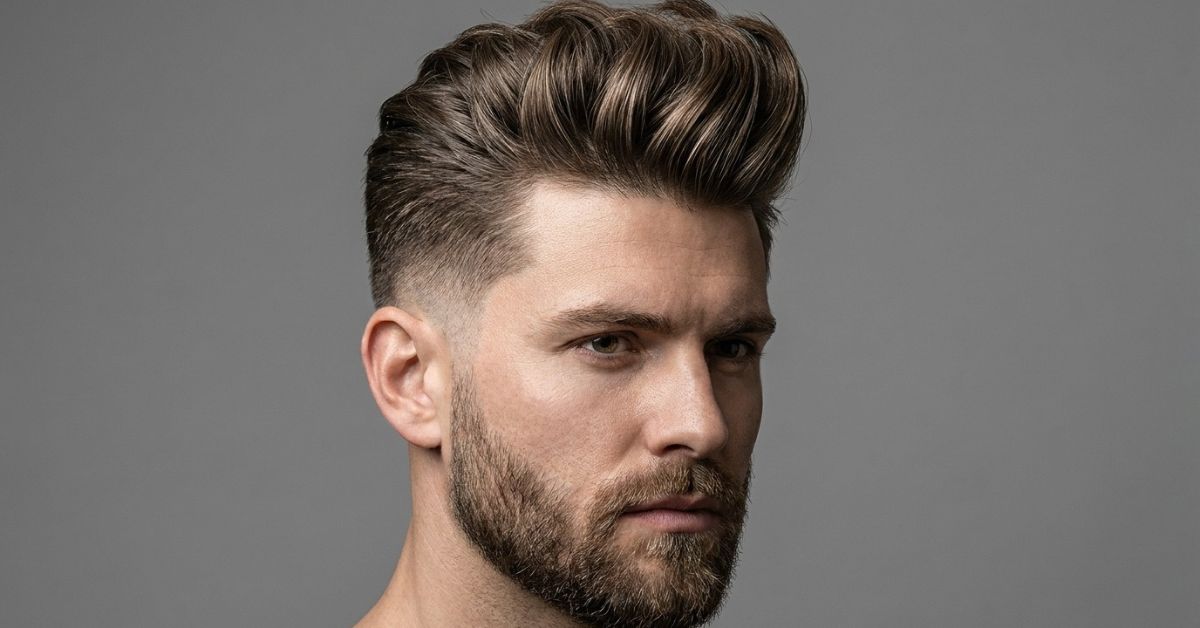
The quiff hairstyle has outlasted every fashion cycle for one simple reason: it works. You get height at the front, a clean finish at the sides, and enough flexibility to look sharp at the office or relaxed on a weekend. Straight, wavy or curly hair, there is a quiff hairstyle that fits.
In this guide, you will find 28 quiff variations, from the timeless classic to the bold blonde. You will also learn what a quiff really is, how it differs from a pompadour, what to tell your barber, and how to style it at home. Pick a favorite, save a photo, and take it to your next appointment.
Quick answer: A quiff is a men’s haircut with short sides and a longer top that is lifted at the front and swept up and back. Most quiffs need roughly 3 to 5 inches (7 to 12 cm) of hair on top.
Trendy Men’s Quiff Haircut Ideas
Each style below shows what makes it different, who it suits, and one practical styling tip. Fade names refer to where the sides start to blend: low fades sit near the ears and neckline, mid fades start around the temples, and high fades climb higher on the head.
Classic Quiff
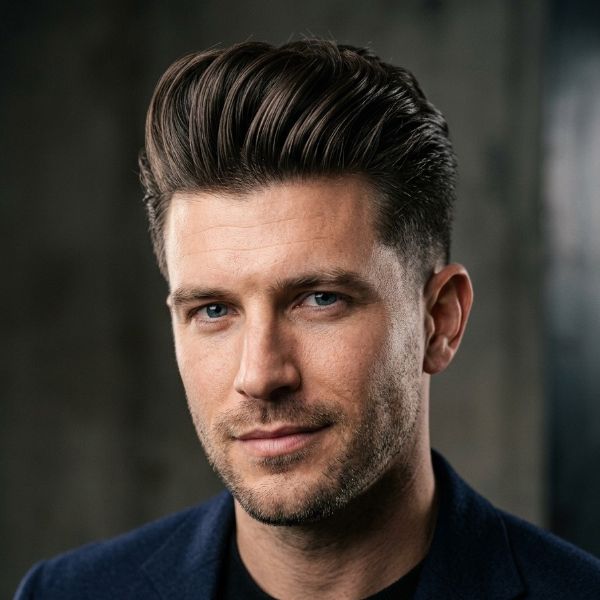
The classic quiff is the original template for every quiff hairstyle that followed. The top is thick, lifted at the front and brushed back, with neat tapered sides. It carries a clear 1950s feel but still looks sharp today. Use a light pomade for a soft shine and a defined shape. It suits oval and square faces and works well for formal settings.
Messy Quiff
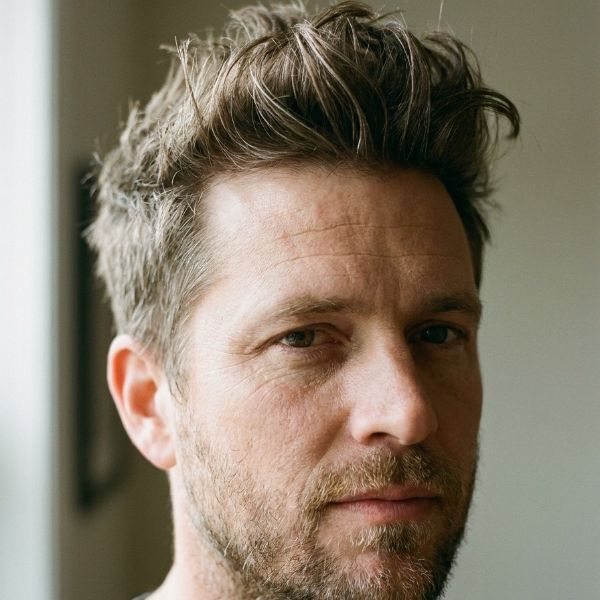
A messy quiff keeps the height but drops the polish. The top is loose, separated and a little rebellious, which makes it perfect for guys who dislike fussy mornings. Rough dry your hair, then work in matte clay with your fingers. Wavy and thick hair gives the best result because the natural movement does half the work.
Textured Quiff
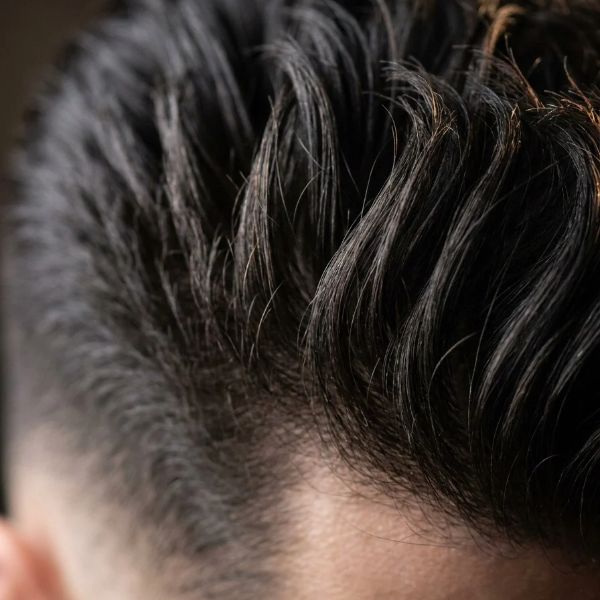
This version uses layered cutting so the top breaks into visible pieces instead of one smooth mass. The finish is matte and natural, closer to a relaxed model look than a retro one. Ask your barber for point cutting on top. Add a pea sized amount of texturizing paste and scrunch it through from the roots.
Modern Quiff
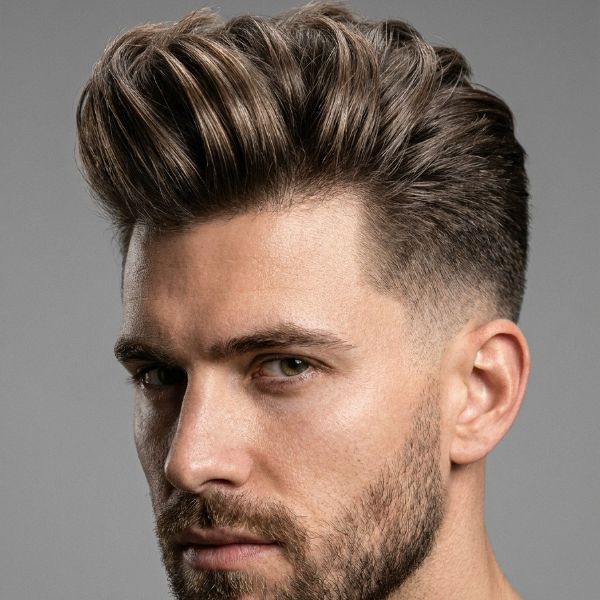
The modern quiff is cleaner and a bit lower than the classic. It keeps lift at the front but pairs it with a matte finish and tighter sides. It is a smart everyday option for work. Blow dry the front upward first, then set it with a flexible hold product so it moves naturally.
Short Quiff
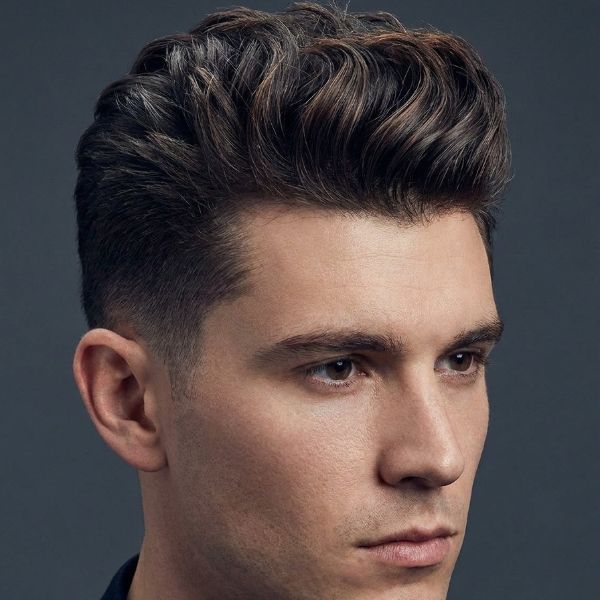
A short quiff leaves about 2 to 3 inches on top, so it grows out gracefully and needs very little time. The shorter length can also make thinning hair look fuller. Use a small amount of paste and push the front up with your fingertips. Trims every three to four weeks keep the shape tidy.
Quiff Fade
Here the quiff meets a fade, and the contrast does all the talking. The sides blend from short to skin or near skin, which makes the top look taller. Choose a low, mid or high fade depending on how bold you want to look. Book a touch up every two to four weeks to keep the blend crisp.
Medium Quiff

A medium quiff sits around 3 to 4 inches on top, which is the sweet spot for most men. It has enough length to lift and sweep, yet it is easy to manage. It is also a great starting point if you are trying a quiff for the first time. Pair it with a taper or a mid fade.
Quiff with Beard
A quiff paired with a beard creates balance: volume on top and weight on the jaw. The sharpest results come from fading the sides straight into the beard so there is no sudden gap. Keep the beard trimmed to a length that matches the top. This combination also suits round faces, since the beard adds angles.
Short Quiff with Low Taper Fade
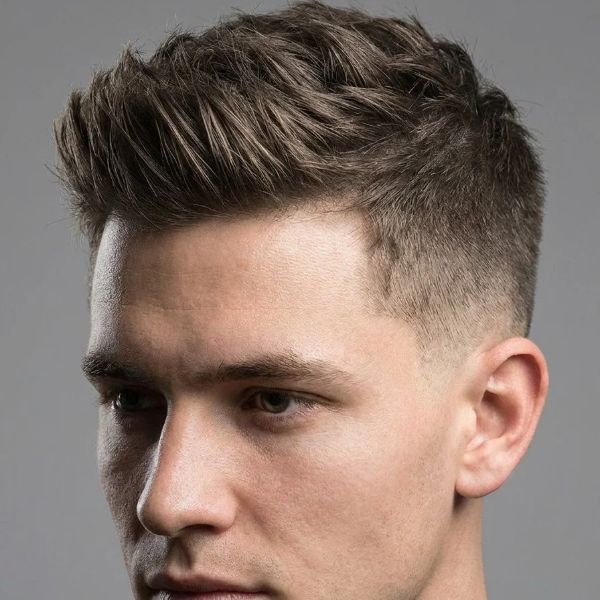
This is one of the safest, most professional choices. The taper starts just above the ears and neckline, so the sides stay tidy without looking severe. The short top lifts neatly at the front. It works well for interviews and client meetings. A light matte cream is usually enough.
Tousled Textured Quiff with Low Fade
Relaxed and slightly undone, this style adds a low fade to a loosely textured top. The fade keeps the edges clean while the top looks casual. Try a sea salt spray before blow drying to build grip and separation. It suits creative workplaces and weekend plans alike.
Wavy Quiff
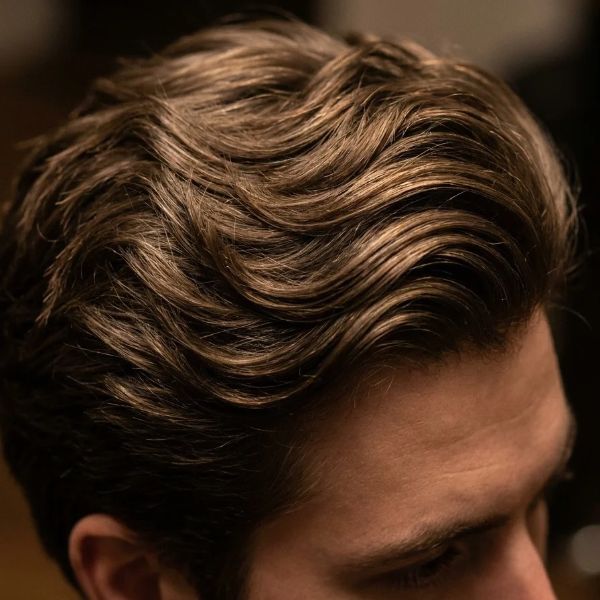
Natural waves give a quiff built in volume and movement. The goal is to work with the wave pattern, not fight it. Apply a light styling cream to damp hair, diffuse or air dry, then lift the front with your fingers. Avoid brushing dry waves, because it can turn them into frizz.
Short Textured Quiff with Mid Fade
A mid fade begins around the temples, which gives this cut stronger contrast than a low fade. The short textured top keeps it practical and modern. It suits men with straight or slightly wavy hair who want a sporty, sharp look. Use clay for a dry, grippy hold.
Messy Quiff with Taper Fade
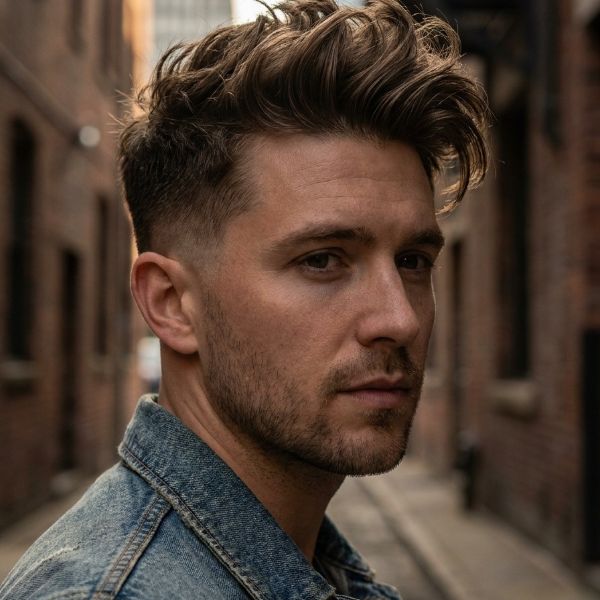
This one pairs a tousled top with a neat taper at the sides and back. That mix of clean edges and loose texture looks effortless but intentional. It is ideal for guys who want a stylish look without spending long in front of the mirror. A matte paste and a quick finger style are all you need.
Long Quiff
A long quiff keeps five inches or more on top, so it looks dramatic and flows beautifully when styled well. It needs more effort: a blow dryer, a round brush and a strong hold product. Expect trims every six to eight weeks. It is best for men with thick, healthy hair who enjoy styling.
Thick Quiff Fade
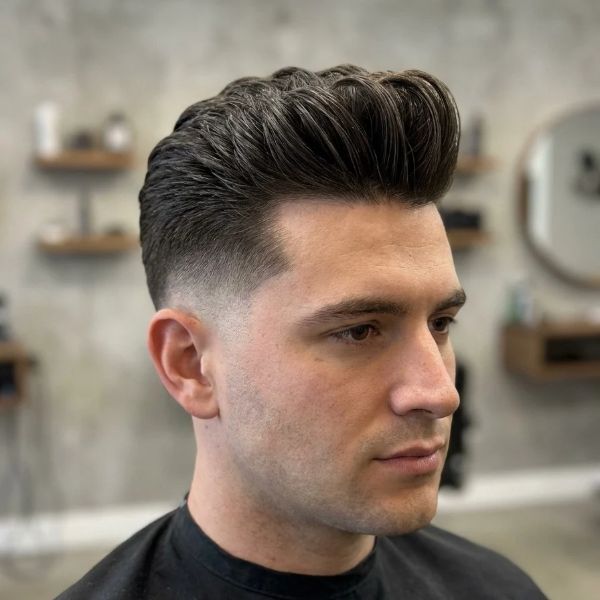
Dense hair naturally supports height, so this style makes the most of it. A fade on the sides prevents the shape from becoming too bulky. Ask your barber to thin the top slightly with thinning shears so it does not feel heavy. Use a strong hold clay to keep the lift all day.
Full Textured Quiff with Low Skin Fade
A low skin fade takes the sides down to bare skin near the ears and neckline. Combined with a full, textured top, it creates a very sharp, high contrast result. It does require regular upkeep, so plan on a visit every two to three weeks. Finish with a matte product to show off the texture.
Tousled Short Quiff with Low Fade
This is a soft, lightweight option for busy mornings. The top is short, brushed forward and up, then roughed up for a touchable finish. The low fade keeps the sides neat. It is a great pick for students and professionals who want easy, repeatable styling. A dab of paste does the job.
Messy Wavy Quiff with Low Taper

If you have waves, this is the quiff to try. The low taper keeps the outline clean while the wavy top does what it likes. Use a curl or wave cream and let the hair dry mostly on its own. Resist over styling, because the beauty here is the natural shape.
Natural Quiff with High Fade
A high fade creates a bold, dramatic contrast with a natural, unforced top. It looks modern and confident. Because the top is styled naturally, you need very little product, just a light cream to control flyaways. It works especially well on oval and square faces.
Undercut Quiff
The undercut quiff has sides that are cut very short and disconnected from the longer top, with no gradual blend in between. That sharp line is what separates it from a fade. It is a statement look for men who want visible edge. Use a firm pomade to slick the top back and up so the contrast stays clear.
Youthful Short Quiff with Drop Fade and Beard
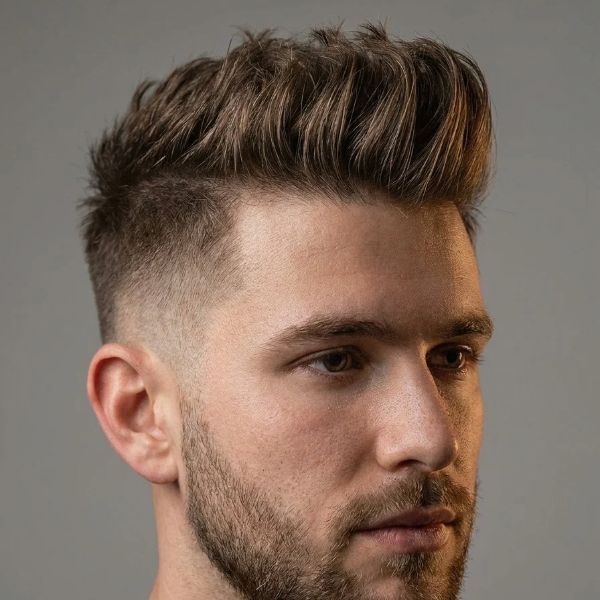
A drop fade curves down behind the ear, following the shape of the head. Paired with a short quiff and a groomed beard, it gives a youthful yet polished look. The curve draws attention to the volume on top. Keep the beard line sharp and the top lightly textured.
Textured Quiff with Sharp Fade
Crisp lineups and a clean fade give this cut a precise, structured frame. The textured top then adds a relaxed counterpoint. It is a confident look that photographs well. Ask for a razor finished edge around the hairline, and use clay or paste to define the top.
Edgy Blonde Quiff
Bleached or icy blonde hair instantly makes a quiff the center of attention. Choppy layers on top and a skin fade at the sides create real impact. Bleaching can dry out hair, so visit a professional colorist and use a bond repair treatment. A purple shampoo once a week helps control brassy tones.
Long Quiff Fade
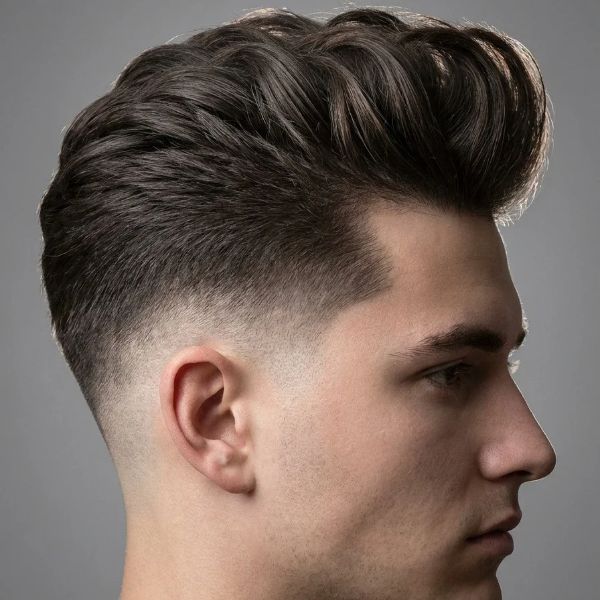
This pairs generous length on top with a clean fade, creating dramatic contrast between the two zones. It is a favorite for men who want height without a bulky silhouette. Blow dry the front upward, then set with a strong hold product. Regular fade maintenance is essential to keep the shape sharp.
Straight Smooth Quiff with Mid Skin Fade
Straight hair makes for a polished, sleek quiff. Blow dry with a round brush, lifting the front as you go, then finish with a light pomade for a clean shine. A mid skin fade adds a crisp edge. This is the most formal option on the list and suits business settings very well.
Curly Quiff
Curls bring volume without much effort, and a short fade keeps the shape controlled. Apply a curl cream to damp hair, diffuse on low heat, and avoid heavy products that flatten the curls. Keep the sides closely cut so the curls on top stand out. Trim the top every six to eight weeks.
Pompadour Quiff
This hybrid leans toward the pompadour: more height, a stronger sweep back and a glossier finish. It usually needs around 4 to 6 inches of length. Use a blow dryer, a comb and a strong pomade to sculpt it. It is a great choice for weddings, parties and anyone who loves a retro vibe.
Textured Fringe Quiff
The front of this quiff falls softly toward the forehead instead of standing fully upright. It gives a relaxed, boyish look and can help balance a high forehead. Style the fringe with a light paste and keep the sides tapered. It is a good bridge between a fringe and a full quiff.
Disconnected Quiff
A disconnected quiff keeps the top noticeably longer and separate from closely clipped sides, with a visible step between them. Scissors shape the top while clippers handle the sides. It is bold and graphic. Use a matte clay to keep the top full, and ask your barber how often the sides will need refreshing.
What Is A Quiff Haircut?
A quiff hairstyle is a men’s haircut with short sides and a longer top that is lifted at the front and swept upward and back. The contrast between height on top and tidy sides gives the cut its shape. Whether you choose a fade, a taper or an undercut, the principle stays the same.
The style has deep roots. It blends elements of the 1950s pompadour and flat top, and sometimes the mohawk. It grew out of a post war push against short, strict men’s cuts and became a staple of the British Teddy Boy scene. It returned in the 1980s and again in the 1990s, and it has stayed popular in many forms since.
Quiff vs Pompadour
People often mix up the two, and barbers do too. Here is a simple way to tell them apart:
- Quiff: Softer, more textured, usually matte, with lift concentrated at the front hairline.
- Pompadour: Taller, smoother and glossier, with volume rolling back over a larger area of the head.
- Maintenance: A quiff forgives a messy day, while a pompadour usually needs a dryer and more precise styling.
Which Quiff Suits Your Face and Hair?
- Oval face: Almost any quiff works.
- Round face: Choose extra height and a fade to add length.
- Square face: A textured quiff softens strong angles.
- Long face: Keep the height moderate and consider a fringe style.
- Fine or thinning hair: Go shorter and use a light volumizing product.
- Thick, wavy or curly hair: Use the natural texture and ask for thinning if it feels heavy.
What To Tell Your Barber
“Quiff” on its own can mean different things, so be specific. Use this checklist:
- Say how much length you want on top, for example 3 to 4 inches.
- Name the side style: taper, low fade, mid fade, high fade or undercut.
- Describe the finish: textured and matte, or smooth and polished.
- Show a clear reference photo of the hair from the front and side.
- Ask how often you will need a trim and what product to use.
How To Style A Quiff At Home
- Wash your hair and towel dry until it is damp, not dripping.
- Apply a volumizing mousse or sea salt spray to the roots.
- Blow dry the front upward and back using a round brush or your fingers.
- Warm a small amount of clay, paste or pomade between your palms.
- Work it through from the back to the front, then shape the lift at the hairline.
- Finish with a light hairspray if you need all day hold.
Matte clay and paste suit a textured quiff hairstyle, while pomade gives a smoother, shinier finish. Start with a small amount, because you can always add more.
Final Thought
The quiff hairstyle earns its place because it adapts. You can make it short or long, sharp or messy, subtle or bold. The best choice depends on your hair type, face shape and how much time you want to spend styling. Choose one of the 28 ideas above, bring a photo to your barber, and describe the length, fade and finish clearly. With the right cut and a few simple habits, your quiff will look polished every day.
FAQs About Quiff Hairstyle Men
What do I tell my barber for a quiff?
Ask for short faded or tapered sides with about 3 to 5 inches on top, longer at the front. Bring a photo and name the fade height and finish.
What is the difference between fringe and quiff?
A fringe falls forward over the forehead, while a quiff is lifted upward and swept back to create height at the front.
What face shape is a quiff for?
A quiff hairstyle suits most face shapes, especially oval, square and round faces, since the lift adds length and balance.
Is quiff attractive?
Many people see the quiff as polished and confident, though results depend on matching the cut to your face shape and hair type.
What is a modern quiff haircut?
A modern quiff has a textured, matte top with tapered or faded sides. It is less rigid and easier to style than the classic version.